
dehydration symptomssigns of dehydrationhealth tipshydration benefitsdrinking water benefitswellness tipshealthy lifestylebody hydration
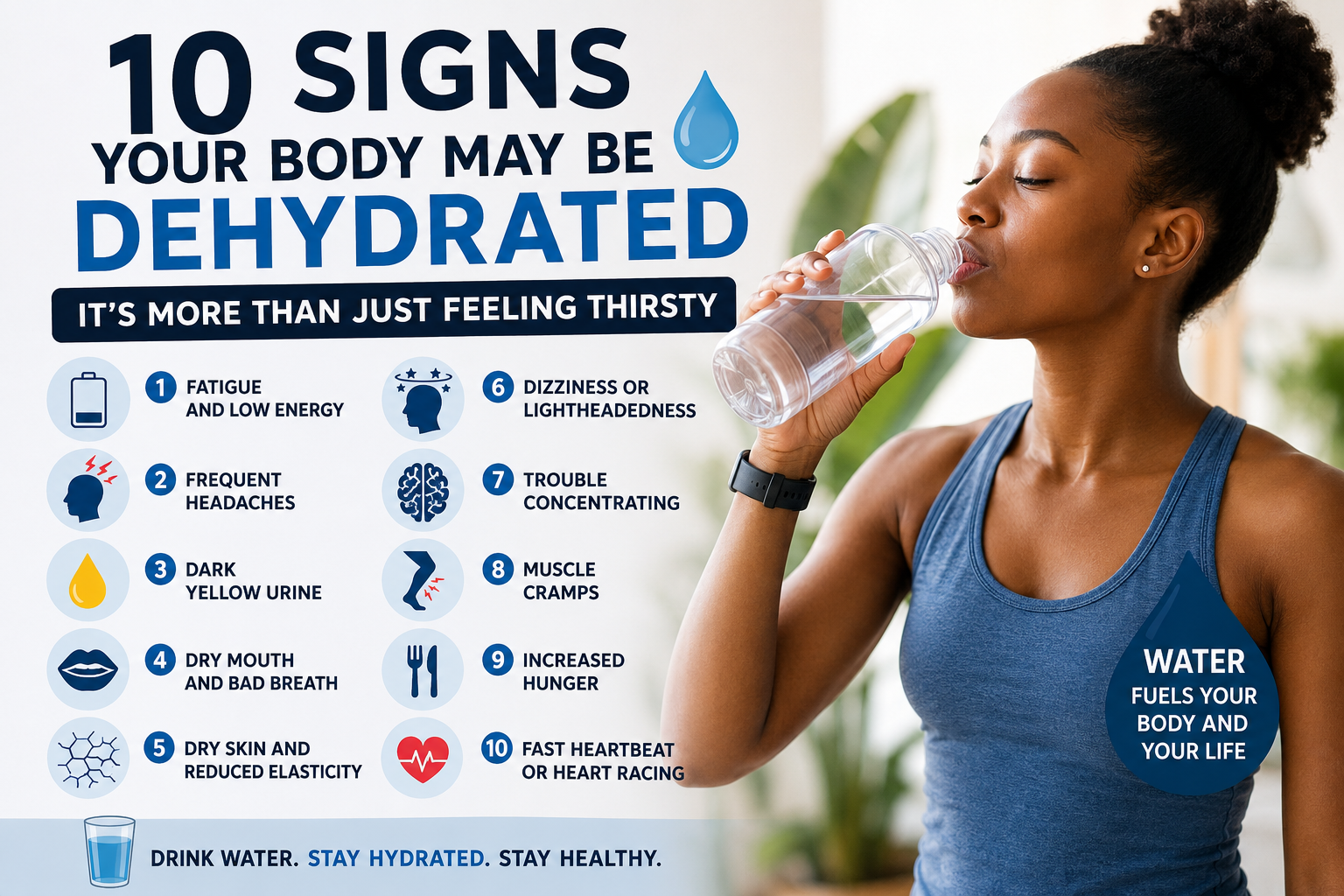
10 Signs Your Body May Be Dehydrated (It’s More Than Just Feeling Thirsty)
Discover 10 hidden signs of dehydration your body may show before thirst appears, including fatigue, headaches, dry coughskin, dizziness, and brain fog. Learn simple hydration tips for better health.
July 16, 2026
Introduction: Dehydration Can Affect Your Body Before You Notice Thirst
Many people believe dehydration only happens when they feel extremely thirsty. However, thirst is not always the first warning sign. Your body may already be lacking enough fluids and showing other symptoms that are easy to ignore.
Water is essential for almost every function in your body. It helps regulate temperature, support digestion, transport nutrients, maintain healthy skin, protect joints, and keep your organs working properly. When your body loses more fluids than it replaces, dehydration can occur.
The surprising part is that dehydration symptoms can appear in ways you may not expect. Feeling tired, having headaches, experiencing dry skin, or struggling to concentrate may all be signs that your body needs more water.
Here are 10 signs your body may be dehydrated and what you can do to support better hydration.
1. Constant Fatigue and Low Energy
Feeling tired throughout the day may not always mean you need more sleep. Dehydration can reduce blood volume, making your heart work harder to circulate oxygen and nutrients around your body.
When your cells do not receive enough fluids, you may feel weak, exhausted, or less energetic.
What you can do:
Drink water regularly throughout the day instead of waiting until you feel extremely thirsty.
2. Frequent Headaches
Headaches are one of the common signs of dehydration. When your body lacks enough fluids, it can affect the balance of water and electrolytes, which may trigger headaches.
You may experience:
* Pressure or discomfort in your head
* Difficulty concentrating
* A dull, persistent headache
Before taking medication for a headache, consider whether you have consumed enough water.
3. Dark Yellow Urine
Your urine color can provide clues about your hydration level. Dark yellow or amber urine often means your body is conserving water because it does not have enough fluids.
Pale yellow urine usually indicates better hydration.
However, remember that certain foods, supplements, and medications can also affect urine color.
4. Dry Mouth and Bad Breath
Your body needs enough water to produce saliva. When you are dehydrated, your mouth may become dry, allowing bacteria to increase and contribute to bad breath.
Signs include:
* Dry tongue
* Sticky feeling in the mouth
* Unpleasant breath
* Increased thirst
Drinking enough water and maintaining good oral hygiene can help.
5. Dry Skin and a Dull Complexion
Hydration plays an important role in maintaining healthy skin. When your body lacks fluids, your skin may appear dry, tired, or less refreshed.
Possible signs include:
* Dry or flaky skin
* Less skin elasticity
* More noticeable fine lines
While water is important, healthy skin also depends on nutrition, sleep, skincare, and sun protection.
6. Dizziness or Feeling Lightheaded
Dehydration can affect blood circulation and may cause your blood pressure to drop. This can lead to dizziness, especially when standing up quickly.
If dizziness happens often, it is important to consider other possible causes and speak with a healthcare professional if needed.
Please m
7. Trouble Concentrating or Brain Fog
Your brain depends on proper hydration to function well. Even mild dehydration can affect focus, memory, and mental performance.
You may notice:
* Difficulty concentrating
* Feeling mentally tired
* Forgetfulness
* Reduced productivity
Keeping your body hydrated supports better brain function.
8. Muscle Cramps and Weakness
Water helps your muscles work properly by maintaining electrolyte balance. When you lose fluids through sweating and do not replace them, muscle cramps may occur.
This is especially common among people who exercise frequently or work in hot environments.
9. Increased Hunger and Food Cravings
Sometimes your body can confuse thirst with hunger. When you are dehydrated, you may feel the urge to eat even though your body actually needs fluids.
Try drinking a glass of water before reaching for unnecessary snacks.
10. Fast Heartbeat or Feeling Your Heart Racing
Dehydration can affect your blood circulation. When there is less fluid in your bloodstream, your heart may work harder to maintain circulation.
Some people may notice:
* Faster heartbeat
* Weakness
* Feeling uncomfortable during activity
Frequent or severe heart racing should be discussed with a healthcare professional because many different factors can cause it.
How Much Water Does Your Body Need?
Water requirements are different for everyone. Your needs depend on:
* Age
* Body size
* Activity level
* Weather conditions
* Diet
* Pregnancy or breastfeeding
* Health status
The best approach is to drink fluids consistently throughout the day and increase your intake when you exercise, sweat heavily, or spend time in hot conditions.
Simple Ways to Stay Hydrated Every Day
You can improve your hydration habits by:
✅ Drinking water after waking up
✅ Carrying a reusable water bottle
✅ Eating fruits and vegetables with high water content
✅ Drinking more fluids during exercise
✅ Limiting excessive sugary drinks
✅ Paying attention to your body’s signals
Frequently Asked Questions (FAQs)
Can you be dehydrated without feeling thirsty?
Yes. Thirst is not always the first sign of dehydration. Your body may show symptoms like fatigue, headaches, dry mouth, dizziness, or dark urine before strong thirst appears.
How quickly can dehydration happen?
Dehydration can happen within a few hours, especially during hot weather, intense exercise, illness, vomiting, or diarrhea.
Does drinking water improve skin health?
Proper hydration supports healthy skin, but water alone cannot replace a complete skincare routine. Nutrition, sleep, skincare products, and sun protection also play important roles.
What is the fastest way to rehydrate?
Drinking water is usually the easiest way to replace fluids. If you lose many fluids through sweating, vomiting, or diarrhea, electrolytes may also be needed.
When should you seek medical help for dehydration?
You should seek medical advice if you experience severe symptoms such as confusion, fainting, extreme weakness, inability to keep fluids down, or very little urine.
Final Thoughts
Dehydration is more than just feeling thirsty. Your body can send many warning signs, including tiredness, headaches, dry skin, dizziness, muscle cramps, and difficulty focusing.
Making hydration a daily habit can support your energy, digestion, skin health, and overall wellness. Instead of waiting until you feel thirsty, pay attention to the smaller signals your body gives you.
Your body depends on water every day make hydration part of your healthy lifestyle.
Disclaimer
This article is for informational and educational purposes only and should not be considered medical advice. It is not intended to replace professional diagnosis, treatment, or consultation with a qualified healthcare provider.
Everyone’s hydration needs are different depending on personal health, lifestyle, environment, and other factors. If you experience persistent symptoms of dehydration or have health concerns, consult a healthcare professional for personalized guidance.
0
Comments
Sign in to leave a comment.