
Vitamin deficiencieshealthy skinhair healthnail carebeauty tipswellnessnutritionhealthy lifestyleskincarehair growthnatural beauty
7 Silent Vitamin Deficiencies That Can Show Up on Your Skin, Hair, and Nails
Seven silent vitamin deficiencies that can affect your skin, hair, and nails. Learn the warning signs, the best food sources, and how to support your health naturally.
July 10, 2026 Seen by 79
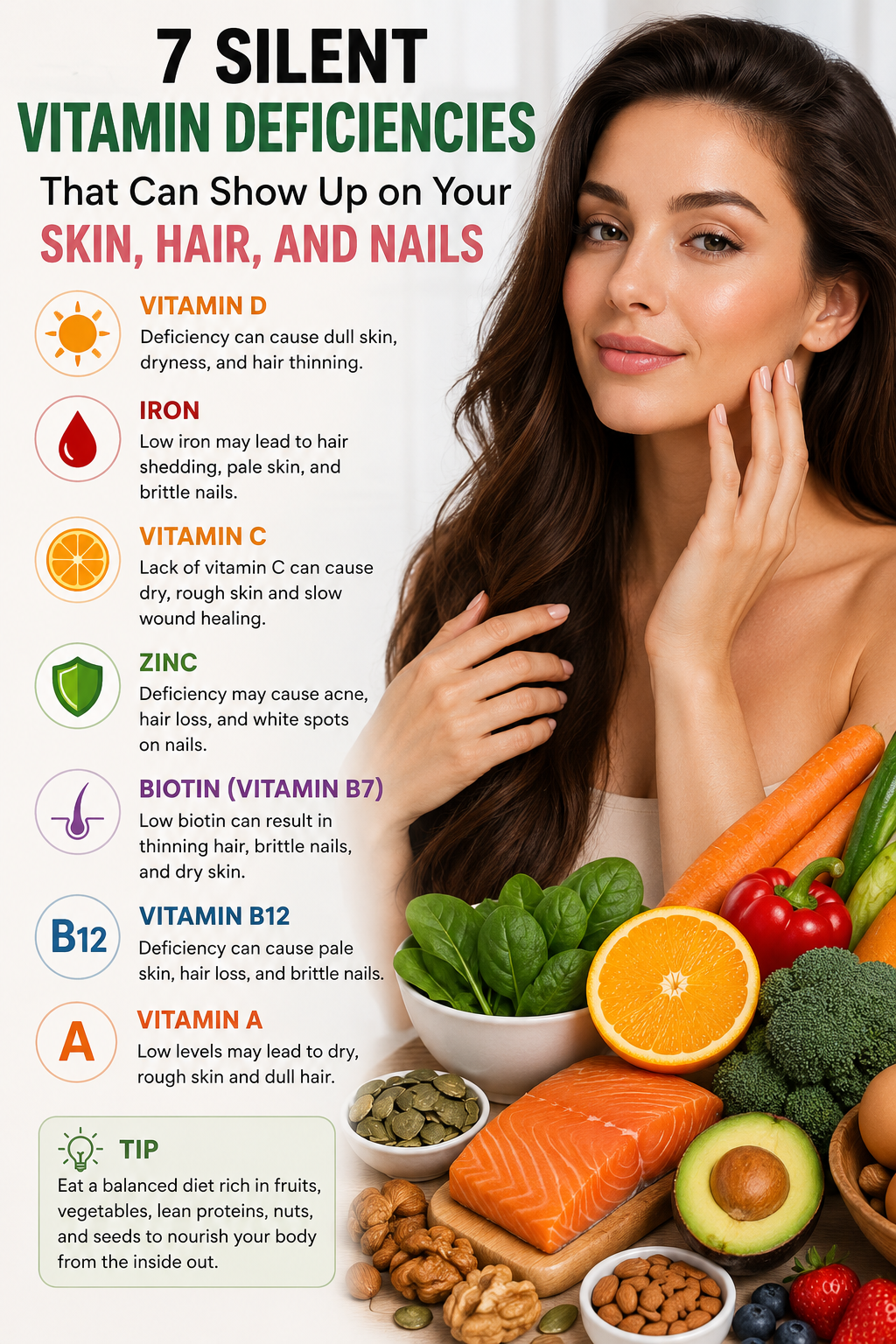
Many people spend hundreds of dollars on skincare products, hair treatments, and nail care without realizing that the real problem may be happening inside the body. While creams, shampoos, and beauty products can improve your appearance, they cannot always fix issues caused by nutritional deficiencies.
Your skin, hair, and nails are often among the first parts of your body to show signs that something is missing from your diet. Dry skin, frequent breakouts, brittle nails, excessive hair shedding, and slow hair growth may not simply be cosmetic concerns. In some cases, they can be early warning signs that your body lacks important vitamins and minerals.
Vitamin deficiencies usually develop gradually. Because the symptoms appear slowly, many people ignore them or assume they are simply getting older, feeling stressed, or using the wrong beauty products. Learning to recognize these silent signs can help you improve both your appearance and your overall health.
Here are seven vitamin and mineral deficiencies that can affect your skin, hair, and nails and what you can do to support your body naturally.
Vitamin D Deficiency
Vitamin D is well known for supporting healthy bones, but it also plays an important role in maintaining healthy skin and supporting normal hair growth.
People who have low vitamin D levels may notice that their skin looks dull, dry, or irritated. Some research has also linked low vitamin D to increased hair shedding and certain forms of hair loss. Because vitamin D helps regulate the growth cycle of hair follicles, insufficient levels may contribute to thinning hair over time.
Many adults do not get enough vitamin D because they spend most of their day indoors or use sunscreen consistently, which reduces the skin’s ability to produce vitamin D from sunlight.
Foods that naturally contain vitamin D include fatty fish such as salmon and sardines, egg yolks, fortified dairy products, and fortified cereals. Safe sunlight exposure may also help increase vitamin D production, depending on your location, skin type, and season.
If you suspect you have low vitamin D, a healthcare professional can recommend a blood test and advise whether supplementation is appropriate.
Iron Deficiency
Iron deficiency is one of the most common nutritional deficiencies worldwide, particularly among women of childbearing age.
Iron helps carry oxygen throughout the body. When iron levels become too low, the body may prioritize essential organs over less critical tissues such as hair, skin, and nails.
Common signs of iron deficiency may include excessive hair shedding, pale skin, brittle nails, fatigue, weakness, and feeling cold more often than usual. Some people also develop spoon-shaped nails or notice that their nails break easily.
Iron-rich foods include lean red meat, chicken, fish, beans, lentils, spinach, and fortified breakfast cereals. Pairing plant-based iron sources with foods rich in vitamin C, such as oranges or bell peppers, can improve iron absorption.
Because taking too much iron can be harmful, supplements should only be used under medical guidance after appropriate testing.
Vitamin C Deficiency
Vitamin C is essential for producing collagen, the protein that keeps skin firm, smooth, and resilient. It also acts as a powerful antioxidant, helping protect skin from damage caused by environmental factors.
When vitamin C intake is too low, skin may appear rough, dry, or less elastic. Wounds may heal more slowly, and some people bruise more easily. Hair may become dry and weak, while nails can become fragile.
Fortunately, vitamin C is found in many fresh fruits and vegetables, including oranges, strawberries, kiwi, guava, broccoli, tomatoes, and bell peppers.
Eating a colorful variety of fruits and vegetables each day is one of the simplest ways to maintain healthy vitamin C levels while supporting glowing skin naturally.
Zinc Deficiency
Zinc is involved in hundreds of important processes throughout the body, including skin repair, wound healing, immune function, and hair growth.
A lack of zinc may lead to acne that heals slowly, rough or inflamed skin, thinning hair, and white spots or ridges on the nails. In severe cases, people may also experience delayed wound healing and increased susceptibility to infections.
Good dietary sources of zinc include beef, poultry, seafood, pumpkin seeds, nuts, beans, dairy products, and whole grains.
Because excessive zinc supplementation can interfere with the absorption of other minerals, it is best to seek professional advice before taking high-dose supplements.
Biotin Deficiency
Biotin, also known as vitamin B7, has become one of the most talked-about nutrients for healthy hair and nails. Although true biotin deficiency is uncommon, it can have noticeable effects on your appearance when it occurs.
Low biotin levels may contribute to thinning hair, brittle nails, dry skin, and a red, scaly rash around the eyes, nose, or mouth. Because biotin helps the body convert food into energy and supports the production of keratin, a protein found in hair and nails, inadequate levels can affect their strength and growth.
Many foods naturally contain biotin, including eggs, almonds, walnuts, peanuts, sunflower seeds, sweet potatoes, mushrooms, salmon, and avocados. Eating a balanced diet usually provides enough biotin for most healthy adults.
While biotin supplements are popular, they are not necessary for everyone. In fact, taking large amounts of biotin can interfere with certain laboratory test results, including some blood tests used to assess heart conditions and thyroid function. Always speak with a healthcare professional before starting supplements.
Vitamin B12 Deficiency
Vitamin B12 is essential for healthy nerves, red blood cell production, and DNA synthesis. A deficiency can develop slowly and often goes unnoticed until symptoms become more obvious.
Your skin may become unusually pale or develop areas of darker pigmentation. Some people notice hair thinning or premature graying, while others experience brittle nails. Beyond appearance, vitamin B12 deficiency may also cause fatigue, weakness, numbness or tingling in the hands and feet, memory problems, or difficulty concentrating.
Vitamin B12 is naturally found in animal-based foods such as meat, fish, poultry, eggs, milk, yogurt, and cheese. People who follow vegetarian or vegan diets may need fortified foods or supplements to maintain healthy levels.
If you experience persistent symptoms, a healthcare provider can determine whether testing is appropriate and recommend treatment if needed.
Vitamin A Deficiency
Vitamin A supports healthy skin cell production, immune function, and vision. It helps keep the skin soft and maintains the normal function of the oil glands around hair follicles.
When vitamin A intake is too low, the skin may become dry, rough, or flaky. Some people develop tiny, rough bumps on the backs of their arms or thighs, a condition often associated with poor skin cell turnover. Hair may appear dry and lose its natural shine.
Excellent sources of vitamin A include carrots, sweet potatoes, spinach, kale, pumpkin, mangoes, eggs, and liver. Orange and dark green vegetables are especially rich in beta-carotene, which the body converts into vitamin A.
Although vitamin A is important, more is not always better. Taking excessive vitamin A supplements can actually contribute to hair loss and other health problems, so supplementation should only be used when recommended by a healthcare professional.
How to Reduce Your Risk of Vitamin Deficiencies
Supporting healthy skin, hair, and nails starts with nourishing your body from within. While beauty products can enhance your appearance, they work best when combined with healthy daily habits.
Focus on eating a wide variety of fruits, vegetables, whole grains, lean proteins, healthy fats, legumes, nuts, and seeds. Each food group provides different vitamins and minerals that work together to support your overall health.
Staying hydrated is equally important. Water helps maintain skin moisture, supports circulation, and allows nutrients to reach your cells more effectively.
Regular physical activity, quality sleep, and stress management also contribute to healthier skin and hair. Chronic stress and poor sleep can affect hormone levels and increase inflammation, making existing nutritional issues more noticeable.
Avoid smoking and limit excessive alcohol consumption, as both can reduce nutrient absorption and accelerate skin aging.
Should You Take Supplements?
Supplements can be helpful for people with diagnosed deficiencies or specific medical conditions, but they are not a replacement for a balanced diet.
Taking high doses of vitamins without medical advice can sometimes cause unwanted side effects or even worsen certain health conditions. For example, too much vitamin A may contribute to hair loss, while excessive iron can be harmful if your body does not actually need it.
If you are experiencing persistent hair loss, unusual skin changes, brittle nails, or ongoing fatigue, consider speaking with a healthcare professional. Blood tests can help identify whether a vitamin or mineral deficiency is contributing to your symptoms.
When to Seek Medical Advice
Although nutritional deficiencies are one possible cause of changes in your skin, hair, and nails, they are not the only explanation. Hormonal conditions, thyroid disorders, autoimmune diseases, infections, certain medications, and other medical issues can produce similar symptoms.
Seek medical advice if you notice sudden or severe hair loss, skin changes that do not improve, persistent fatigue, unexplained weight changes, numbness, or symptoms that interfere with your daily life. Early evaluation can help identify the underlying cause and ensure you receive appropriate care.
Final Thoughts
Your skin, hair, and nails can reveal important clues about your overall health. While it is easy to focus on beauty products, lasting improvements often begin with proper nutrition and healthy lifestyle habits.
Dry skin, brittle nails, thinning hair, or slow wound healing should not always be dismissed as normal aging or temporary cosmetic concerns. Sometimes these changes are your body’s way of signaling that it needs more of certain vitamins or minerals.
Choosing a balanced diet rich in colorful fruits and vegetables, whole grains, healthy fats, and quality protein is one of the best ways to support your natural beauty from the inside out. If symptoms persist or you suspect a deficiency, consulting a healthcare professional can help you receive an accurate diagnosis and personalized advice.
Healthy skin, strong hair, and resilient nails are not just signs of good beauty habits. They are often reflections of a well-nourished body.
0
Comments
Sign in to leave a comment.