
Baby Blues vs. Postpartum Depression: What’s the Difference?
Learn the difference between baby blues and postpartum depression, including symptoms, causes, warning signs, treatment, and when new mothers should seek help.
September 9, 2026
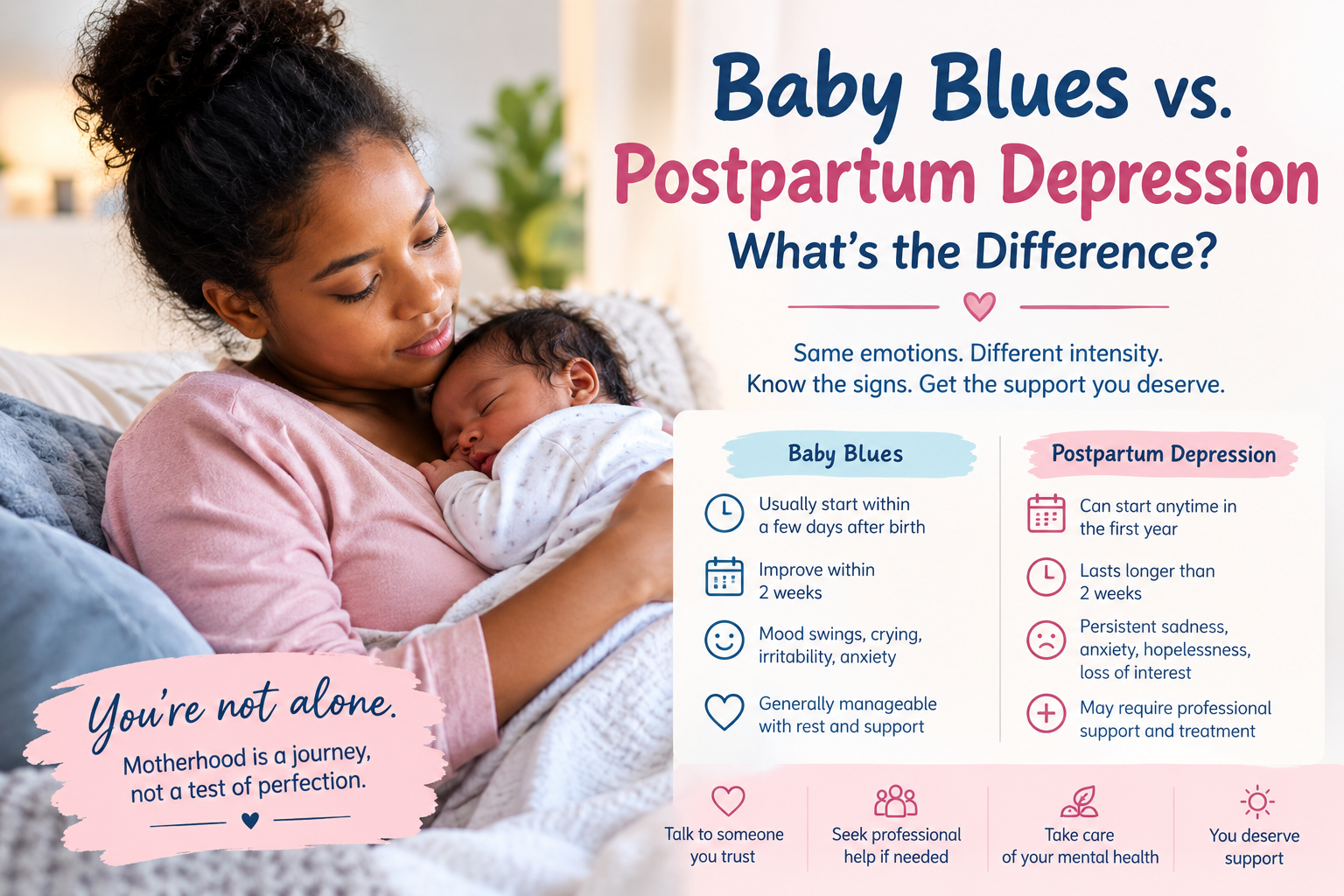
Bringing a baby into the world can be an incredibly beautiful experience, but motherhood also comes with major physical, emotional, and lifestyle changes. After giving birth, many new mothers experience unexpected crying, mood swings, anxiety, exhaustion, irritability, or moments of feeling overwhelmed. Sometimes, these emotions are part of what is commonly called the baby blues. For other mothers, however, the symptoms may be more serious and could be a sign of postpartum depression (PPD).
The two conditions can look similar at first, which is why many new mothers may wonder: “Am I just experiencing the baby blues, or could this be postpartum depression?” Understanding the difference is important. It can help mothers recognize when they may simply need additional rest and support and when they should speak with a healthcare professional.
WHAT ARE THE BABY BLUES?
The baby blues are temporary emotional changes that commonly occur after childbirth. A mother might feel perfectly happy one moment and suddenly find herself crying the next. She may feel irritated, overwhelmed, anxious, or unusually emotional without fully understanding why. These feelings can be surprising. After all, society often presents having a baby as a purely joyful experience. But the reality is that childbirth brings enormous changes.
Hormonal fluctuations, physical recovery, lack of sleep, breastfeeding challenges, changes in routine, and the responsibility of caring for a newborn can all contribute to emotional ups and downs. Baby blues usually begin within the first few days after delivery and generally improve within about two weeks.
Common Signs of Baby Blues
A mother experiencing baby blues may experience:
* Mood swings
* Unexpected crying
* Irritability
* Feeling overwhelmed
* Increased sensitivity
* Mild anxiety
* Restlessness
* Difficulty concentrating
* Feeling emotionally exhausted
* Changes in sleep
* Feeling uncertain about motherhood
The important thing to remember is that baby blues are generally temporary. Having these feelings doesn’t mean that you don’t love your baby or that you’re failing as a mother.
WHAT IS POSTPARTUM DEPRESSION?
Postpartum depression is more serious than the baby blues. Postpartum depression is a form of depression that can develop after childbirth. It can affect a mother’s mood, thoughts, behavior, relationships, and ability to manage everyday responsibilities.
Unlike the baby blues, postpartum depression tends to last longer and may become more intense without appropriate support and treatment. Postpartum depression can begin shortly after childbirth, but symptoms can also appear weeks or months later.
It is important to understand that postpartum depression does not mean a woman is a bad mother. A mother can love her baby deeply and still experience depression.
What Are the Symptoms of Postpartum Depression?
Postpartum depression can affect everyone differently. Some mothers experience sadness as the main symptom, while others experience anxiety, anger, emotional numbness, or a sense of disconnection.
Possible symptoms include:
* Persistent sadness or emptiness
* Frequent or uncontrollable crying
* Feeling hopeless
* Feeling worthless or guilty
* Losing interest in activities you once enjoyed
* Severe or persistent anxiety
* Extreme irritability or anger
* Difficulty concentrating
* Difficulty making decisions
* Major changes in appetite
* Sleeping too much
* Difficulty sleeping even when the baby is sleeping
* Extreme fatigue
* Feeling emotionally disconnected from the baby
* Feeling like you are not a good mother
* Withdrawing from family and friends
* Feeling unable to cope with normal daily responsibilities
Experiencing one of these symptoms occasionally does not automatically mean someone has postpartum depression. However, persistent or worsening symptoms deserve attention.
BABY BLUES Vs POSTPARTUM DEPRESSION: THE BIGGEST DIFFERENCE
The biggest differences are duration, severity, and impact on everyday life. With baby blues, emotional changes generally improve within around two weeks. A mother may have difficult moments but may also have periods when she feels relatively happy or like herself.
With postpartum depression, symptoms tend to persist, become more severe, or interfere significantly with everyday life.
Baby Blues
* Usually begin within a few days after birth
* Usually improve within two weeks
* Mood changes can come and go
* Symptoms are generally mild to moderate
* Support, rest, reassurance, and time can help
Postpartum Depression
* Can begin soon after birth or later
* Symptoms persist beyond two weeks or are severe
* Symptoms may interfere with daily life
* A mother may feel persistently sad, anxious, hopeless, numb, or overwhelmed
* Professional support may be needed
If you’re unsure which one you’re experiencing, don’t feel that you need to figure it out alone. A healthcare professional can help you understand what you’re experiencing.
WHY DO THE BABY BLUES HAPPEN?
There isn’t always one simple explanation. After pregnancy, the body goes through dramatic hormonal changes. At the same time, the mother is recovering from childbirth and adjusting to life with a newborn.
Sleep deprivation can make emotional regulation more difficult. Feeding the baby, recovering physically, managing household responsibilities, and adjusting to a new identity can all add stress. Even positive life changes can be emotionally demanding. That’s why a mother can feel grateful and happy about her baby while also feeling exhausted or overwhelmed. Two emotions can exist at the same time.
WHAT CAUSES POSTPARTUM DEPRESSION?
Postpartum depression also doesn’t have one single cause. A combination of biological, emotional, and environmental factors can contribute.
Hormonal Changes
Pregnancy and childbirth involve major hormonal changes. These changes can affect mood and emotional well-being.
Lack of Sleep
Newborns frequently wake during the night, and prolonged sleep disruption can have a significant effect on mental and emotional health.
Physical Recovery
Pain, exhaustion, breastfeeding difficulties, or recovering from complications can make the postpartum period more challenging.
Emotional Stress
Becoming a parent is a major life transition. A mother may feel pressure to do everything perfectly while simultaneously learning how to care for a newborn.
Lack of Support
Having little practical or emotional support can make motherhood feel especially overwhelming.
Previous Mental Health Difficulties
Women with a history of depression or anxiety may have a higher risk of experiencing postpartum depression, although postpartum depression can happen to anyone.
A mother does not need to have a history of depression to experience PPD. Postpartum Depression Can Look Different Than Sadness
One important thing many people don’t realize is that postpartum depression doesn’t always look like constant crying. Some mothers experience anger or intense irritability while others may experience overwhelming anxiety or frightening thoughts and some mothers describe feeling emotionally numb or disconnected rather than sad.
A mother might even appear to be doing well from the outside while privately struggling. That’s why it’s important not to judge someone’s mental health based only on appearances.
WHAT CAN HELP A NEW MOTHER?
If someone is experiencing baby blues, simple support can make a meaningful difference.
Family members and partners can help by:
* Preparing meals
* Helping with household chores
* Giving the mother opportunities to rest
* Helping with childcare
* Listening without judgment
* Encouraging her to talk about her feelings
* Giving her time to shower or take a short break
* Encouraging her to seek professional support when necessary
Sometimes, practical help is one of the best forms of emotional support. Instead of telling a struggling mother, “You should be happy; you have a healthy baby,” try asking:
“How are you really feeling, and what can I do to help?” That simple question can open the door to an important conversation.
WHEN SHOULD YOU TALK TO A HEALTHCARE PROFESSIONAL?
It’s a good idea to contact a healthcare professional if emotional symptoms:
* Last longer than two weeks
* Become increasingly severe
* Interfere with daily activities
* Make it difficult to care for yourself
* Make it difficult to care for your baby
* Cause persistent anxiety or hopelessness
* Make you feel disconnected from people you love
You don’t need to wait until you feel completely overwhelmed before asking for help. Postpartum depression is treatable, and treatment can include counseling or psychotherapy, practical and emotional support, medication when appropriate, or a combination of approaches recommended by a qualified healthcare professional.
WHAT ABOUT THOUGHTS OF SELF HARM OR HARM TO THE BABY?
This is an especially important warning sign. If a mother is having thoughts of harming herself or her baby, she should seek urgent professional help. Likewise, hallucinations, severe confusion, paranoia, or losing touch with reality after childbirth can be signs of postpartum psychosis, a rare but serious medical emergency. These symptoms require immediate medical attention.
If you or someone you know is experiencing these symptoms, seek emergency medical care or contact your local emergency service immediately.
HOW PARTNERS CAN SUPPORT MOTHERS AFTER BIRTH
Partners can play a major role in postpartum recovery. Don’t assume that because a mother isn’t asking for help, she doesn’t need it. Look for changes in her behavior. Is she constantly exhausted? Is she withdrawing from people? Does she seem unusually anxious, hopeless, angry, or emotionally disconnected? Offer specific help rather than simply saying, “Let me know if you need anything.”
For example:
I’ll take care of dinner tonight, why don’t you sleep while I look after the baby?, or let’s contact your healthcare provider together.
Small acts of support can reduce some of the pressure a new mother is carrying.
YOU DON’T HAVE TO BE A PERFECT MOTHER
One of the most harmful expectations placed on new mothers is the idea that motherhood should come naturally and that they should be happy every moment. Real motherhood is much more complicated. You can love your baby and still feel exhausted, you can be grateful and still feel overwhelmed, you can be excited and still feel anxious and you can be a loving mother and still need help.
There is no prize for suffering silently. Taking care of your mental health isn’t selfish. It is part of taking care of yourself and your baby.
FREQUENTLY ASKED QUESTIONS
How long do the baby blues last?
Baby blues usually improve within about two weeks after childbirth. If symptoms continue beyond that period, become severe, or interfere with daily life, it is important to speak with a healthcare professional.
Can baby blues turn into postpartum depression?
Baby blues and postpartum depression are different conditions, but persistent or worsening emotional symptoms should be taken seriously. If you’re concerned about your symptoms, speak with a healthcare professional.
Can you have postpartum depression without feeling sad?
Yes. Postpartum depression can involve anxiety, irritability, anger, emotional numbness, loss of interest, guilt, or feeling disconnected from your baby—not only sadness.
Does postpartum depression mean I don’t love my baby?
No. Experiencing postpartum depression does not mean you don’t love your baby. Mental health difficulties can affect anyone, including mothers who deeply love their children.
When should I get help for postpartum depression?
Seek professional help if symptoms last longer than two weeks, become severe, or interfere with your ability to function. Seek emergency help immediately if you experience thoughts of harming yourself or your baby, hallucinations, severe confusion, or loss of contact with reality.
FINAL THOUGHTS
The postpartum period can be filled with beautiful moments, but it can also be physically and emotionally challenging. The baby blues are common and usually temporary, while postpartum depression is more persistent or severe and may require professional treatment.
Knowing the difference can help mothers recognize when they need additional support. If you’re a new mother struggling emotionally, remember that you are not alone, and you are not a bad mother because you’re having a difficult time.
Asking for help is not a failure. Your mental health matters, your well-being matters and you deserve support during this important chapter of your life.
Medical Disclaimer: This article is for general educational and informational purposes only. It is not intended to diagnose, treat, or replace advice from a qualified healthcare professional. If you are concerned about your mental or physical health after childbirth, speak with an appropriate healthcare professional. In an emergency or if there is an immediate risk of harm, seek urgent medical assistance.
0
Comments
Sign in to leave a comment.