
Collagen Explained: Why Your Body Produces Less as You Age
Learn what collagen is, why natural collagen production decreases with age, and discover healthy habits that help maintain youthful, glowing skin naturally.
July 5, 2026 Seen by 32
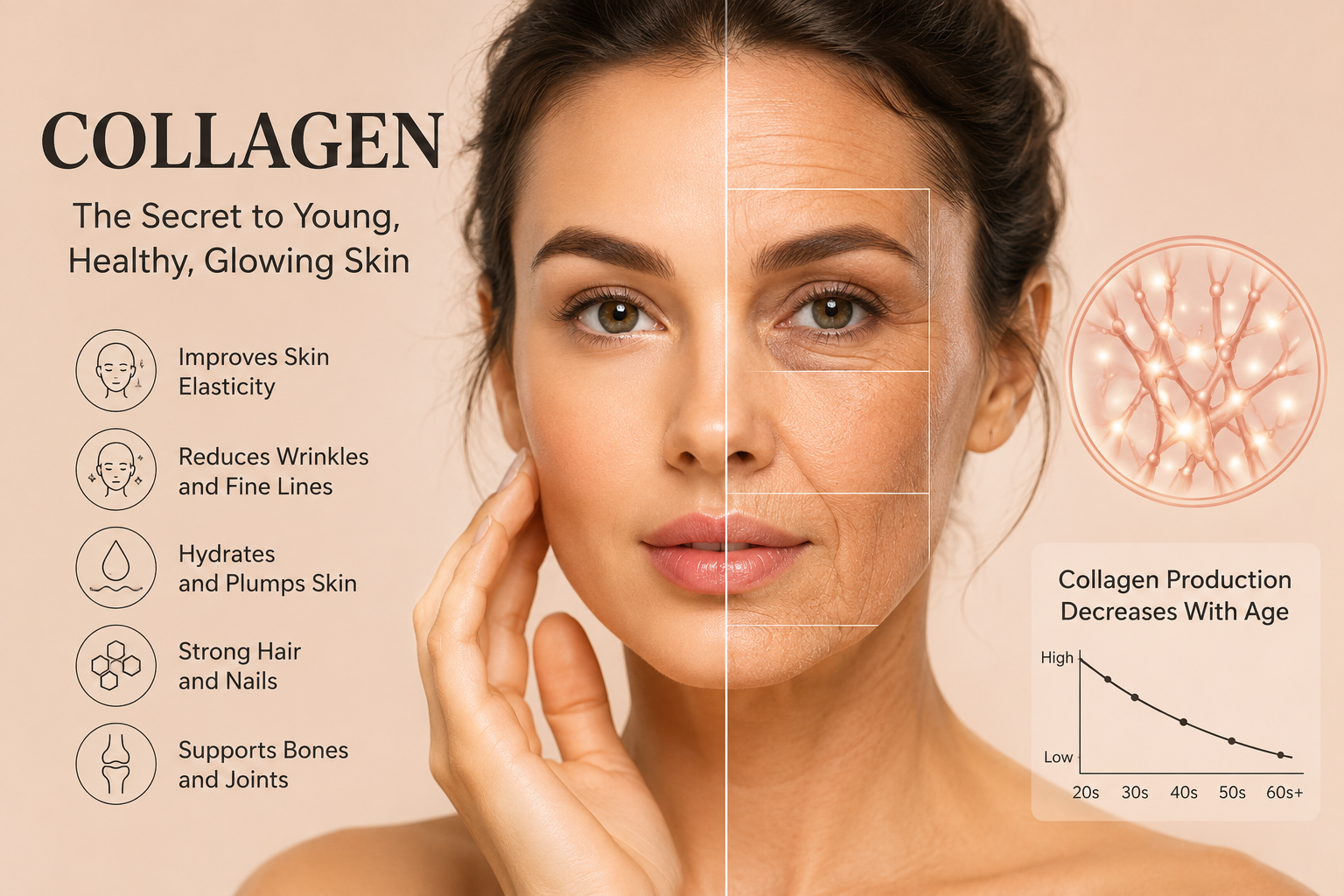
If you have ever searched for ways to achieve glowing skin, reduce wrinkles, or keep your hair healthy, you have probably come across the word collagen. It has become one of the most talked-about topics in the beauty and wellness world, and for good reason. Collagen plays a vital role in keeping your skin firm, smooth, and youthful while also supporting your hair, nails, joints, bones, muscles, and connective tissues. Although collagen is naturally produced by the body, this production does not stay the same throughout life. As the years pass, the body gradually makes less collagen, leading to visible signs of aging and changes in overall health.
Understanding what collagen is and why its natural production decreases with age can help you make informed lifestyle choices that support healthier skin and a stronger body. While aging is a natural process that cannot be stopped, learning how collagen works allows you to protect and maintain it for as long as possible.
Collagen is the most abundant protein in the human body. It acts like a framework that holds the body together, providing structure, strength, and flexibility to many tissues. Imagine collagen as the invisible scaffolding that supports your skin and keeps it firm and resilient. Without enough collagen, the skin loses its elasticity, becomes thinner, and develops wrinkles more easily.
Your body contains different types of collagen, each serving a unique purpose. Some types are mainly found in the skin, helping it remain smooth and supple. Others support cartilage, which cushions the joints and allows comfortable movement. Collagen is also found in bones, muscles, tendons, ligaments, blood vessels, and even the corneas of the eyes. This widespread presence explains why collagen is essential for overall health rather than just beauty.
The body creates collagen by combining amino acids obtained from protein-rich foods. This process also requires important nutrients such as vitamin C, zinc, copper, and iron. When your diet provides these nutrients in sufficient amounts, your body has the building blocks it needs to produce collagen effectively. However, if these nutrients are lacking, collagen production may become less efficient.
During childhood, adolescence, and early adulthood, collagen production is naturally high. The body continuously replaces old collagen fibers with new ones, helping the skin recover from minor damage and maintain its youthful appearance. This is one reason why younger skin usually looks firmer, smoother, and more elastic than older skin. Small cuts heal more quickly, and the skin can bounce back after being stretched or compressed.
As people grow older, natural collagen production begins to slow. Many experts believe this gradual decline starts in the mid to late twenties, although the exact timing varies from person to person. At first, the changes may not be noticeable. However, as collagen production continues to decrease over the years, the effects become more visible.
One of the earliest signs of declining collagen is the appearance of fine lines around the eyes and mouth. These fine lines may gradually deepen into wrinkles as the skin loses its natural firmness. The face may also appear less full because collagen helps maintain the skin’s structure and volume. Reduced collagen can make the skin feel thinner, drier, and less able to retain moisture.
Loss of collagen does not only affect the face. Many people notice that the skin on their hands, neck, and chest also becomes less firm over time. Hair may become thinner, nails may become more brittle, and wounds may take longer to heal than they did during youth. These changes are all connected, at least in part, to reduced collagen production.
Several natural biological processes contribute to collagen decline. As the body ages, the cells responsible for producing collagen become less active. Existing collagen fibers also become weaker and break down more quickly than before. At the same time, the body’s ability to repair damaged collagen slows significantly. These combined changes result in a gradual loss of skin strength and elasticity.
Hormonal changes also play an important role. Women often experience a significant reduction in collagen production after menopause due to lower estrogen levels. Estrogen helps support collagen formation, so when hormone levels decrease, collagen loss accelerates. Men also experience collagen loss as they age, although it generally occurs more gradually.
While aging itself naturally reduces collagen production, several lifestyle habits can speed up the process. Excessive exposure to sunlight is one of the biggest causes of premature collagen breakdown. Ultraviolet rays penetrate the skin and damage collagen fibers, making the skin age faster than it otherwise would. This process is known as photoaging and is one of the main reasons dermatologists recommend wearing sunscreen every day, even when the weather is cloudy.
Smoking is another major factor that damages collagen. Harmful chemicals in cigarette smoke reduce blood flow to the skin, limiting the oxygen and nutrients needed for healthy collagen production. Smoking also increases oxidative stress, which damages skin cells and accelerates visible aging. People who smoke often develop wrinkles earlier than non-smokers because their collagen breaks down more rapidly.
Poor nutrition can also reduce the body’s ability to produce collagen efficiently. Diets high in added sugars and heavily processed foods may contribute to collagen damage through a process known as glycation. During glycation, excess sugar attaches to collagen fibers, making them weaker and less flexible. Over time, this can lead to sagging skin and deeper wrinkles.
A lack of protein in the diet can also affect collagen production because collagen is made from amino acids found in protein-rich foods. Similarly, insufficient vitamin C can interfere with collagen formation since this vitamin plays a critical role in the production process. Without enough vitamin C, the body cannot build collagen as effectively.
Chronic stress may also contribute to collagen loss. Long-term stress increases the production of cortisol, a hormone that can negatively affect skin health when levels remain elevated for extended periods. High cortisol levels may slow skin repair, increase inflammation, and contribute to premature aging. Combined with poor sleep and unhealthy eating habits, chronic stress can noticeably affect the skin’s appearance.
Sleep is another important factor in maintaining healthy collagen levels. During deep sleep, the body repairs tissues, produces important hormones, and supports skin regeneration. Consistently getting too little sleep can reduce the body’s ability to repair collagen damage and maintain healthy skin. This is one reason why people often notice dull skin and dark circles after periods of inadequate rest.
Environmental pollution can also play a role in collagen breakdown. Air pollution exposes the skin to harmful particles that generate free radicals. These unstable molecules damage healthy skin cells and collagen fibers, contributing to premature aging. Although it is impossible to avoid pollution completely, cleansing the skin properly and protecting it from environmental stressors may help reduce some of its effects.
Fortunately, there are many healthy habits that can support natural collagen production throughout life. Eating a balanced diet rich in fruits, vegetables, lean proteins, healthy fats, and whole grains provides the nutrients needed for collagen formation. Citrus fruits, berries, leafy greens, tomatoes, fish, eggs, beans, nuts, and seeds all contribute valuable vitamins and minerals that support healthy skin.
Protecting the skin from excessive sun exposure is equally important. Applying sunscreen daily, wearing protective clothing, and seeking shade during the strongest sunlight hours can help preserve existing collagen and reduce premature aging. These simple habits often have a greater long-term impact than many expensive skincare products.
Regular physical activity also supports healthy circulation, delivering oxygen and nutrients to skin cells. Exercise promotes overall health while helping maintain healthy tissues throughout the body. Drinking enough water supports skin hydration, allowing the skin to appear smoother and healthier, although hydration alone does not directly increase collagen production.
A consistent skincare routine may also help maintain healthier-looking skin. Gentle cleansing, daily moisturizing, and using products containing ingredients such as vitamin C or retinoids may support collagen production and improve the skin’s appearance over time. Healthy lifestyle habits work best when combined with consistent skincare rather than relying on a single product or treatment.
It is important to remember that collagen loss is a normal part of aging and should not be viewed as something to fear. Every stage of life brings natural changes, and aging is a reflection of experience and growth. The goal should not be to eliminate every wrinkle but to support healthy skin by giving the body the nutrients and care it needs.
Understanding collagen and the reasons its production decreases with age empowers you to make smarter decisions for your health and beauty. While no solution can completely stop the aging process, healthy daily habits can help slow unnecessary collagen loss and support stronger, healthier skin for years to come. By protecting your skin from sun damage, eating a nutrient-rich diet, staying physically active, getting enough sleep, managing stress, and avoiding harmful habits such as smoking, you can help your body maintain its natural collagen production and enjoy healthier, more radiant skin throughout every stage of life.
0
Comments
Sign in to leave a comment.