
skincare mistakes to avoidskincare routine tipshealthy skin habitsskincare for beginnersavoid skin irritation
Common Skincare Mistakes That May Affect Your Skin and What to Do Instead
Discover common skincare mistakes that may cause dryness, irritation, breakouts, and sun damage, plus simple dermatologist-informed ways to improve your routine.
October 19, 2026 Seen by 46
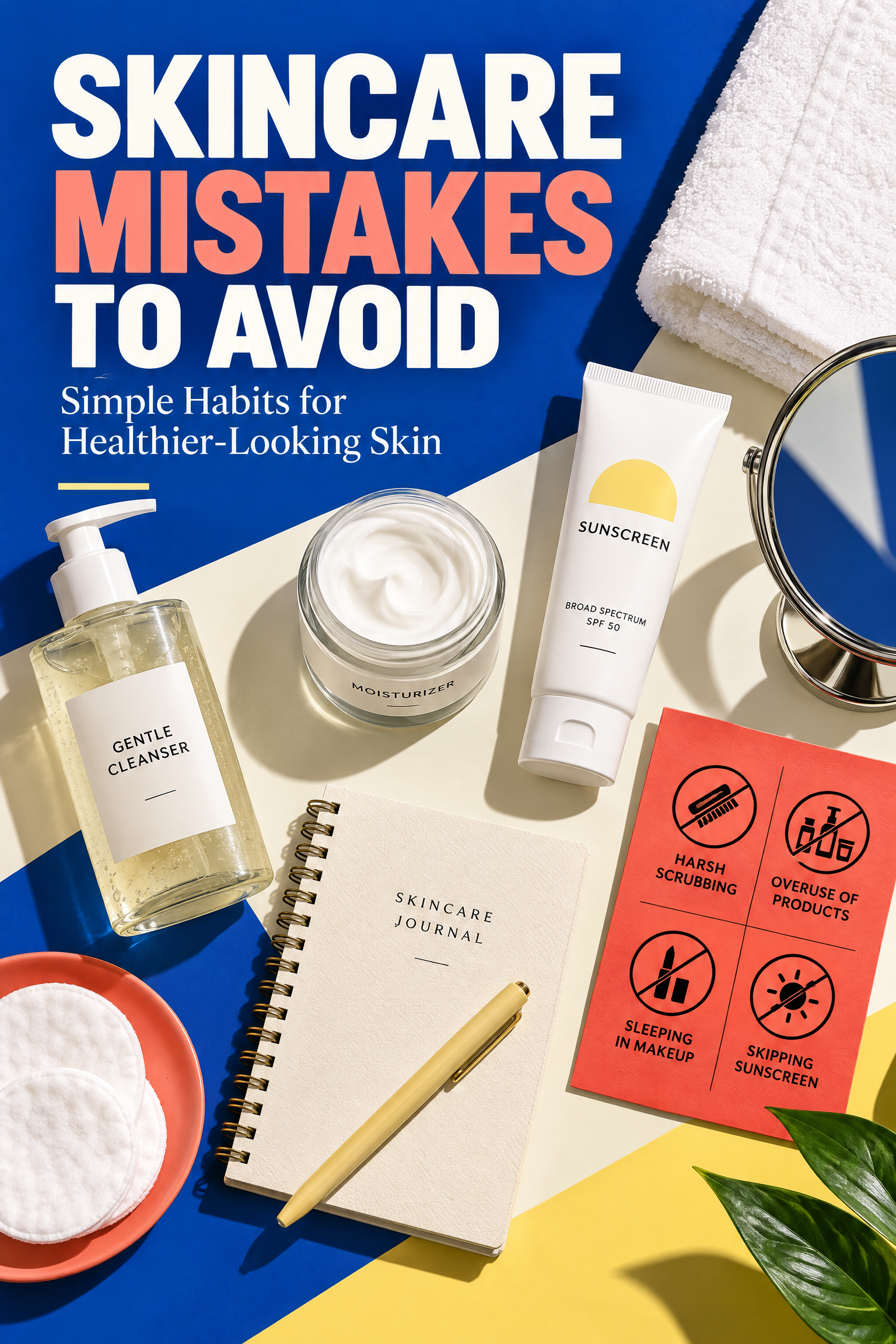
A good skincare routine does not need to include dozens of products. In many cases, healthy-looking skin is supported by a few consistent habits: gentle cleansing, suitable moisturization, sun protection, careful product selection, and patience. However, even well-intentioned routines can create problems. Washing too often, scrubbing aggressively, trying too many new products, sleeping in makeup, or skipping sunscreen may leave your skin dry, irritated, congested, or more vulnerable to sun damage. The right routine depends on your skin type, age, environment, concerns, and health history. Still, avoiding common mistakes can help most people create a calmer and more practical approach to daily skincare.
WASHING YOUR FACE TOO OFTEN
Many people believe that washing the face repeatedly will remove oil and prevent breakouts. In reality, excessive cleansing may irritate the skin and make it feel dry or uncomfortable. The American Academy of Dermatology recommends limiting face washing to twice daily and after heavy sweating. A simple routine is to cleanse once in the morning and once before bed. Wash again after exercise or activities that leave you sweaty. If your face feels tight or uncomfortable after cleansing, consider whether you are washing too frequently or using a product that is too harsh.
WHAT TO DO INSTEAD
Use a gentle, non-abrasive cleanser. Apply it with your fingertips, rinse with lukewarm water, and pat your face dry with a soft towel. Avoid using very hot water, which may worsen dryness for some people.
SCRUBBING THE SKIN TOO AGGRESSIVELY
Scrubbing can feel like it is making the skin cleaner, but rough brushes, abrasive scrubs, and vigorous rubbing may increase irritation. This is especially important for people with acne, rosacea, eczema, sensitive skin, or a weakened skin barrier. The AAD advises using the fingertips and resisting the urge to scrub because scrubbing can irritate the skin. Irritated skin may become red, sore, flaky, or more likely to develop blemishes.
WHAT TO DO INSTEAD
If you choose to exfoliate, select a method appropriate for your skin type and follow the product instructions. Do not exfoliate sunburned skin, open cuts, or areas that are already irritated. Introduce one exfoliating product at a time and stop if you develop burning, swelling, or persistent redness.
USING TOO MANY ACTIVE INGREDIENTS AT ONCE
Retinol, exfoliating acids, acne treatments, vitamin C, and other active ingredients can be useful for specific goals. The problem begins when several strong products are introduced together without a plan. Using too many actives may cause dryness, peeling, stinging, redness, or breakouts caused by irritation. It can also make it difficult to identify which product is helping or causing a reaction.
WHAT TO DO INSTEAD
Build your routine gradually. Start with a gentle cleanser, moisturizer, and sunscreen. Add one treatment product at a time and use it according to the label or a dermatologist’s instructions. Give your skin time to adjust before adding another active ingredient. If you are pregnant, breastfeeding, taking medication, or managing a skin condition, ask a healthcare professional which products are appropriate for you.
CHANGING ACNE TREATMENTS TOO QUICKLY
Acne products rarely produce instant results. Trying a different treatment every few days may irritate your skin and make it difficult to judge whether a product is working. The AAD notes that people may need to use an acne treatment for six to eight weeks before seeing some improvement, while clearer skin can take several months.
WHAT TO DO INSTEAD
Follow the product directions and be patient. If dryness occurs, use a moisturizer designed for acne-prone skin. Avoid repeatedly applying harsh astringents, rubbing alcohol, or other products that leave your skin feeling painfully dry. If you have deep, painful, persistent, or scarring acne, seek advice from a dermatologist. Over-the-counter products are not suitable for every type of acne.
APPLYING ACNE TREATMENT ONLY TO VISIBLE SPOTS
It may seem logical to apply acne medication only to individual blemishes. However, acne can develop across an area of skin even when only a few spots are visible. The AAD explains that some acne treatments work better when applied as a thin layer over acne-prone areas, not only on existing blemishes.
WHAT TO DO INSTEAD
Follow the product label carefully. Use a thin layer over the recommended area rather than applying extra product to one spot. More product does not necessarily mean faster results and may increase irritation.
SKIPPING MOISTURIZER BECAUSE YOUR SKIN IS OILY
Oily skin can still become dehydrated or irritated. Avoiding moisturizer completely may make your routine feel uncomfortable and can encourage the use of harsh products that damage the skin barrier.
WHAT TO DO INSTEAD
Choose a lightweight, noncomedogenic moisturizer. Noncomedogenic products are formulated to be less likely to clog pores in most people. If your skin is oily in some areas and dry in others, use different amounts of moisturizer rather than applying the same thick layer everywhere.
SLEEPING IN MAKEUP
Leaving makeup on overnight can contribute to clogged pores and irritation. Even makeup labeled noncomedogenic may cause problems if it remains on the skin for long periods, particularly when mixed with sweat, oil, and environmental particles.
WHAT TO DO INSTEAD
Remove makeup before bed. Cleanse gently afterward and apply moisturizer if your skin feels dry. If you are too tired for a complete routine, keep a suitable makeup-removal product beside your bed as a backup, but do not treat wipes as a replacement for regular gentle cleansing.
SHARING MAKEUP AND DIRTY APPLICATORS
Sharing makeup, brushes, sponges, or applicators can transfer oil, dead skin cells, bacteria, and other contaminants. Eye makeup requires particular care because contamination can affect the eye area. The U.S. Food and Drug Administration advises consumers not to share makeup, to wash their hands before using cosmetics, and to keep containers clean and tightly closed.
WHAT TO DO INSTEAD
Clean brushes regularly according to the tool manufacturer’s instructions. Do not share mascara or eye products. Replace products if they change color, smell, or texture. If you develop an eye infection, discard eye makeup that may have become contaminated.
ASSUMING “NATURAL” MEANS SAFE FOR EVERYONE
Natural, organic, or botanical products can sound gentle, but these labels do not guarantee that a product will suit every person. Plant extracts, essential oils, fragrance, and other ingredients can irritate or trigger an allergic reaction. The FDA notes that there is no formal FDA definition of “natural” for cosmetics and that the source of an ingredient does not automatically determine its safety.
WHAT TO DO INSTEAD
Read the ingredient list and follow the product directions. Introduce unfamiliar products one at a time. Consider testing a small amount on an inconspicuous area before applying a new product widely. Stop using the product if you develop a rash, burning, swelling, or worsening irritation.
IGNORING PRODUCT STORAGE AND EXPIRATION
Skincare and cosmetics can change when stored in heat, humidity, direct sunlight, or unclean containers. A product may also become less suitable after its texture, color, or smell changes. Some cosmetic products do not have required expiration dates, so the FDA recommends paying attention to storage conditions and changes in the product. Writing down the date you open a product can help you track how long it has been in use.
WHAT TO DO INSTEAD
Keep products closed tightly and store them according to the label. Avoid leaving jars open in a steamy bathroom for long periods. Do not add water or saliva to mascara. Discard products that smell unusual, separate unexpectedly, or show signs of contamination.
SKIPPING SUNSCREEN OR APPLYING TOO LITTLE
Sunscreen is not only a summer product. Ultraviolet exposure can contribute to sunburn, skin cancer risk, and premature skin aging. The FDA recommends broad-spectrum sunscreen with an SPF of 15 or higher, used as directed, along with other protective measures. Common mistakes include applying sunscreen only to the face, forgetting the ears and neck, using an old product, and failing to reapply after swimming or sweating.
WHAT TO DO INSTEAD
Apply sunscreen before sun exposure and reapply at least every two hours, or more often when swimming or sweating. Protect your skin with shade, clothing, sunglasses, and a broad-brimmed hat. Check the expiration date, and discard sunscreen that is expired or whose age is unknown when it has no expiration date. Remember that no sunscreen is waterproof. Products labeled water-resistant must state how long they remain effective during swimming or sweating, so read the label carefully.
PICKING AT PIMPLES AND SKIN FLAKES
Squeezing, picking, or scratching can push material deeper into the skin and increase inflammation. It may also raise the risk of lingering marks, pain, infection, or scarring.
WHAT TO DO INSTEAD
Use a suitable acne treatment as directed and keep your hands away from active blemishes. A dermatologist can recommend treatment for painful or persistent acne. If a flaky area is caused by a skin condition, repeated picking will not solve the underlying problem.
COPYING SOMEONE ELSE’S ROUTINE
A routine that works for one person may not work for another. Skin type, climate, genetics, hormones, medication, and existing conditions all influence how skin responds to products.
WHAT TO DO INSTEAD
Keep your routine simple and pay attention to how your skin feels. Choose products based on your needs rather than social-media trends. Make one change at a time so you can understand the result.
A SIMPLE ROUTINE TO FOLLOW
For most people, a basic routine can include gentle cleansing, moisturizer suited to the skin, and daytime broad-spectrum sunscreen. Add treatment products only when there is a clear reason to use them. Avoid creating discomfort in the hope that stronger sensations will produce better results. If a product causes a serious or unexpected reaction, stop using it. Seek professional advice for persistent redness, swelling, painful acne, widespread rash, unusual changes, or symptoms affecting the eyes.
FINAL THOUGHTS
The most common skincare mistakes often come from trying too hard: washing too much, scrubbing too forcefully, using several strong products, or expecting instant results. Healthy-looking skin usually benefits from consistency and patience rather than an overflowing shelf of products. Cleanse gently, moisturize appropriately, protect your skin from the sun, keep cosmetics hygienic, and introduce new treatments slowly. When in doubt, choose the simplest routine that feels comfortable and seek dermatology advice for ongoing concerns.
BEAUTY AND SKIN HEALTH DISCLAIMER
This article is for general educational purposes and is not a substitute for medical or dermatological advice. Skin concerns can have many causes, and skincare products may affect people differently. Stop using a product if you experience a concerning reaction and contact a qualified healthcare professional or dermatologist for persistent, severe, or unexplained symptoms.
SOURCES
https://www.aad.org/public/everyday-care/skin-care-basics/care/face-washing-101
https://www.aad.org/public/diseases/acne/skin-care/habits-stop
https://www.fda.gov/cosmetics/resources-consumers-cosmetics/using-cosmetics-safely
https://www.fda.gov/drugs/understanding-over-counter-medicines/sunscreen-how-help-protect-your-skin-sun
Follow the Charmafrica channel on WhatsApphttps://whatsapp.com/channel/0029VbDjEnP42DcbgRu5aq3g 0
Comments
Sign in to leave a comment.