
How Stress Affects Your Skin and What You Can Do About It
Learn how stress affects your skin, from acne and dryness to premature aging, and discover simple ways to reduce stress and restore your natural glow
June 25, 2026
Introduction
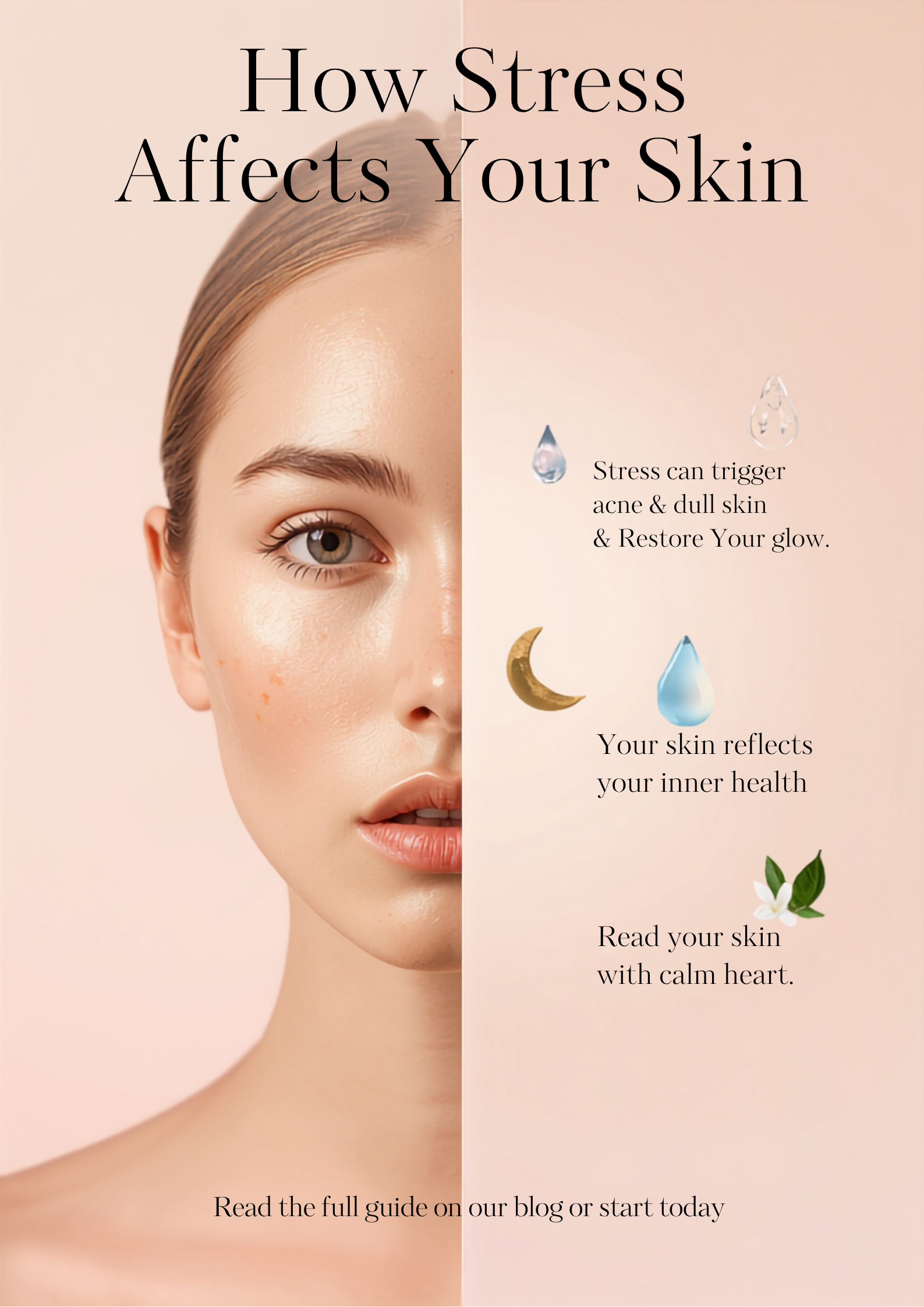
Have you ever noticed that your skin looks different during stressful periods? Maybe you experience sudden breakouts, dryness, dullness, or a tired-looking complexion. This happens because your skin and your emotions are closely connected.
Stress does not only affect your mood — it can also influence your skin’s health. When your body experiences stress, it releases hormones that can change how your skin behaves.
Understanding this connection can help you create better habits for healthier and more radiant skin.
⸻
How Stress Impacts Your Skin
1. Stress Can Trigger Acne Breakouts
When you feel stressed, your body produces more cortisol, a hormone linked to stress responses. Higher stress levels can increase oil production, which may contribute to clogged pores and breakouts.
Stress can also make people touch their face more often or sleep less, which may worsen skin problems.
⸻
2. Stress Can Make Your Skin Look Dull
Stress often affects your sleep and daily habits. Lack of quality sleep can make your skin appear tired, less bright, and less refreshed.
Your skin repairs itself during rest, so poor sleep can affect your natural glow.
⸻
3. Stress Can Cause Dryness and Sensitivity
Long periods of stress may weaken the skin barrier, making your skin more sensitive and less able to maintain moisture.
This can lead to:
* Dry feeling skin
* Redness
* Irritation
⸻
4. Stress Can Speed Up Signs of Aging
Ongoing stress may affect processes related to collagen and skin repair, which are important for keeping skin looking firm and youthful.
This can contribute to:
* Fine lines
* Loss of elasticity
* Tired-looking skin
⸻
What You Can Do to Protect Your Skin
1. Create a Simple Skincare Routine
Keep your routine gentle and consistent:
* Cleanser to remove dirt and oil
* Moisturizer to support hydration
* Sunscreen to protect your skin
A simple routine is often easier to maintain.
⸻
2. Prioritize Sleep
Aim for enough restful sleep because it supports your body’s natural repair process.
Create a relaxing night routine:
* Reduce screen time before bed
* Keep a regular sleeping schedule
* Make your bedroom comfortable
⸻
3. Reduce Daily Stress
Small habits can support stress management:
* Walking
* Exercise
* Meditation
* Journaling
* Spending time doing activities you enjoy
⸻
4. Support Your Skin Through Nutrition
Your skin needs nutrients to stay healthy.
Include:
* Fruits and vegetables
* Healthy fats
* Enough water
* Protein-rich foods
A balanced diet supports your overall skin appearance.
⸻
Conclusion
Your skin often reflects what is happening inside your body. Stress can affect your skin in many ways, but healthy habits, self-care, and a consistent skincare routine can help you maintain a natural glow.
Taking care of your mind and your skin together is an important part of long-term beauty and wellness.
0
Comments
Sign in to leave a comment.