
Hair GrowthHair CareHealthy HairNatural Hair GrowthHair Growth TipsHair Care RoutineLong HairHair HealthHair Loss PreventionStrong HairHair Nutrition
How to Grow Your Hair Naturally: 12 Proven Tips That Actually Work
Want longer, healthier hair? Discover 12 science-backed tips to grow your hair naturally, prevent breakage, and keep your hair strong, shiny, and beautiful.
July 20, 2026
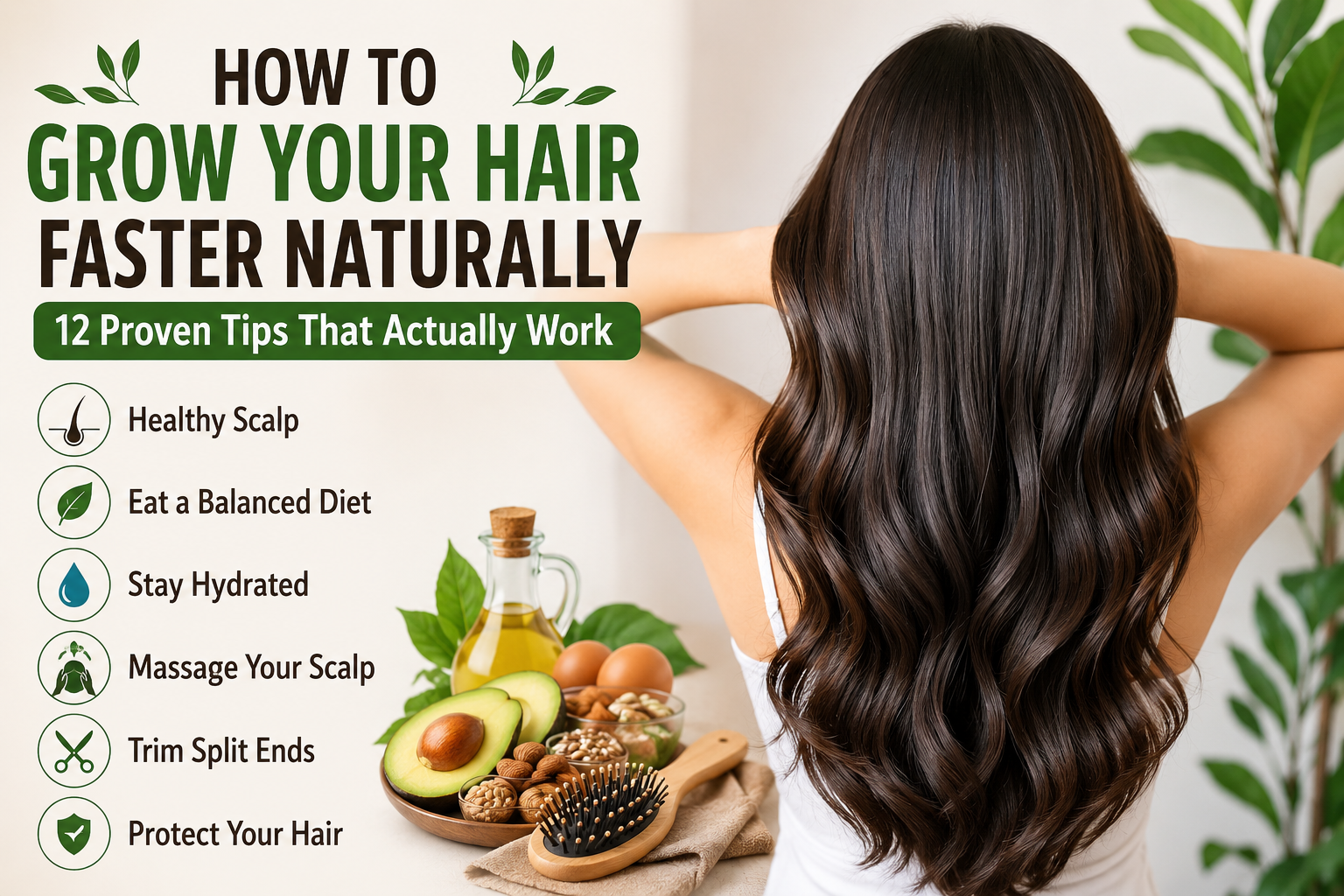
Long, thick, and healthy hair is a goal for many people. While there isn’t a magic product that can make your hair grow several inches overnight, there are proven habits that support healthy hair growth and help you keep the hair you already have.
On average, hair grows about 0.5 inches (1.25 cm) per month, but factors like genetics, diet, stress, age, and hair care habits can influence how healthy and strong that growth is. The good news is that by taking proper care of your scalp and hair, you can reduce breakage, improve hair health, and create the best conditions for steady growth.
In this guide, you’ll discover 12 practical, science-backed tips to help your hair grow longer, stronger, and healthier—naturally.
1. Start with a Healthy Scalp
Healthy hair begins with a healthy scalp. Dirt, excess oil, and product buildup can block hair follicles and make it harder for your scalp to stay in good condition.
What to Do
* Wash your hair regularly based on your hair type.
* Massage your scalp while shampooing.
* Avoid scratching your scalp with your nails.
* Choose a gentle shampoo that suits your hair type.
2. Eat a Balanced Diet
Hair is made mostly of protein, so your diet plays an important role in hair growth.
Include foods rich in:
* Protein (eggs, fish, chicken, beans)
* Iron (spinach, lentils, lean meat)
* Zinc (nuts, seeds)
* Omega-3 fatty acids (salmon, sardines)
* Vitamin C (oranges, strawberries)
* Biotin-rich foods (eggs, sweet potatoes)
A varied, balanced diet supports overall hair health better than relying on a single “superfood.”
3. Stay Hydrated
Your body needs enough water to support healthy skin and hair.
Aim to drink water regularly throughout the day. Hydration won’t make hair grow instantly, but it helps keep your scalp and hair in better condition.
4. Avoid Excessive Heat Styling
Frequent use of straighteners, curling irons, and high-heat blow dryers can weaken hair, causing dryness and breakage.
Better Habits
* Let your hair air-dry when possible.
* Use a heat protectant before styling.
* Keep heat settings as low as practical.
5. Trim Split Ends Regularly
Contrary to popular belief, trimming your hair doesn’t make it grow faster from the scalp.
However, removing split ends helps prevent breakage from traveling up the hair shaft, allowing you to retain more length over time.
A trim every 8–12 weeks is enough for many people, depending on hair condition.
6. Massage Your Scalp
Scalp massage may improve blood flow to the scalp and can be a relaxing part of your routine.
Spend 3–5 minutes gently massaging your scalp with your fingertips several times a week.
7. Protect Your Hair While Sleeping
Cotton pillowcases can create friction that contributes to tangles and breakage.
Consider:
* Sleeping on a satin or silk pillowcase.
* Wearing a loose braid if you have long hair.
* Avoiding tight hairstyles overnight.
8. Reduce Tight Hairstyles
Very tight ponytails, braids, buns, or extensions can place repeated tension on your hair and scalp.
Over time, this may contribute to breakage and, in some cases, traction-related hair loss.
Choose looser styles whenever possible and give your hair regular breaks.
9. Don’t Overwash Your Hair
Washing too often may remove natural oils that help protect your hair.
How often you should wash depends on your hair type:
* Oily hair: every 1–2 days if needed.
* Normal hair: about 2–3 times a week.
* Dry or curly hair: often less frequently, depending on your needs.
Find a routine that keeps your scalp clean without leaving your hair overly dry.
10. Use a Conditioner Every Wash
Conditioner helps reduce tangles, improve softness, and protect the hair shaft from damage.
Apply it mainly to the mid-lengths and ends rather than directly on the scalp unless the product instructions say otherwise.
11. Manage Stress
Long-term stress can contribute to increased hair shedding in some people.
Healthy ways to manage stress include:
* Regular exercise
* Deep breathing or meditation
* Getting enough sleep
* Spending time outdoors
* Talking with supportive friends or family
12. Be Patient and Consistent
Hair growth is gradual. Healthy habits usually show results over several months, not days.
Instead of chasing quick fixes, focus on consistent care:
* Eat nutritious meals.
* Protect your hair from damage.
* Keep your scalp healthy.
* Follow a simple routine.
Small improvements over time often produce the best long-term results.
Common Hair Growth Myths
Myth: Cutting your hair makes it grow faster.
Fact: Hair grows from the roots, not the ends. Trimming helps reduce breakage but doesn’t increase growth speed.
Myth: Brushing your hair 100 times a day helps it grow.
Fact: Excessive brushing can actually damage hair. Brush gently to remove tangles.
Myth: Expensive products always work better.
Fact: Healthy hair depends more on consistent care and choosing products that suit your hair type than on price alone.
Frequently Asked Questions
How fast does hair grow?
On average, about 0.5 inches (1.25 cm) per month, though this varies from person to person.
Can diet affect hair growth?
Yes. A balanced diet that provides enough protein, iron, zinc, vitamins, and healthy fats supports healthy hair growth.
Is hair oil enough to make hair grow?
Hair oils can help moisturize the hair and scalp and reduce breakage, but they are not guaranteed to make hair grow faster on their own.
When should I see a healthcare professional?
If you notice sudden, severe, or patchy hair loss, or hair loss accompanied by other symptoms, it’s a good idea to consult a healthcare professional to identify the underlying cause.
Final Thoughts
Growing healthy hair naturally takes time, patience, and consistent care. While no product can dramatically speed up your natural growth rate, healthy habits can reduce breakage and help you achieve longer, stronger hair over time.
Focus on nourishing your body, caring for your scalp, protecting your hair from damage, and maintaining a simple routine. With consistency, you’ll be giving your hair the best chance to thrive.
Healthy hair is a journey—and every good habit you build today can make a difference in the months ahead.
0
Comments
Sign in to leave a comment.