
Hair CareShampooHealthy HairHair DamageHair Care TipsSulfate-Free ShampooDry HairHair GrowthBeauty TipsScalp CareDamaged HairHair RoutineNatural Hair CareWomen’s BeautyHealthy Scalp
Signs Your Shampoo Is Damaging Your Hair (And What to Use Instead): 10 Warning Signs You Should Never Ignore
Learn the 10 warning signs your shampoo may be damaging your hair. Discover what ingredients to avoid, what to use instead, and how to choose the best shampoo for healthy, shiny hair.
August 10, 2026
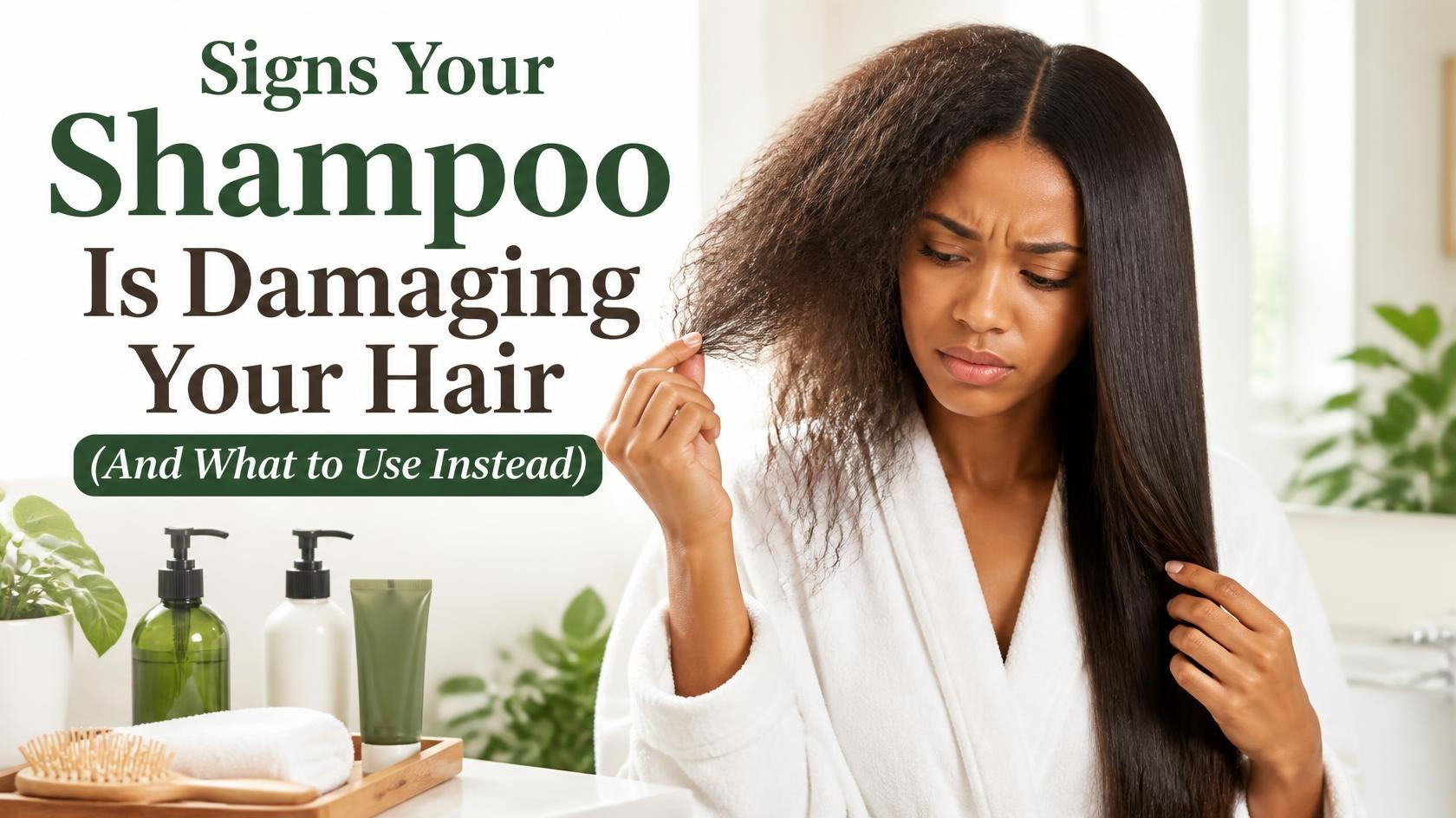
Have you ever wondered why your hair feels dry, brittle, or lifeless even though you wash it regularly? Many people spend a fortune on conditioners, hair masks, and serums, yet overlook the product they use most often their shampoo.
The truth is that not every shampoo is suitable for every hair type. Some formulas contain harsh ingredients that strip away your hair’s natural oils, weaken the hair shaft, and irritate the scalp. Over time, using the wrong shampoo can lead to breakage, excessive shedding, dullness, and an unhealthy scalp.
The good news is that once you recognize the warning signs, you can switch to a gentler shampoo that supports healthier, stronger hair.
WHY YOUR SHAMPOO MATTERS
Your shampoo does more than clean your hair. It affects your scalp health, moisture balance, and even how strong your hair becomes over time.
A healthy shampoo should:
- Clean away dirt and oil without stripping natural moisture.
- Keep your scalp balanced.
- Support healthy hair growth by maintaining a healthy environment for hair follicles.
- Leave your hair soft, manageable, and shiny.
When your shampoo is too harsh, your hair pays the price.
10 SIGNS YOUR SHAMPOO IS DAMAGING YOUR HAIR
1. YOUR HAIR FEELS DRY IMMEDIATELY AFTER WASHING
Healthy hair shouldn’t feel like straw after shampooing. If your hair becomes rough or overly dry as soon as it dries, your shampoo may be removing too much natural oil.
Try instead:
Use a moisturizing shampoo containing glycerin, aloe vera, oat extract, or natural oils.
2. YOUR SCALP FEELS TIGHT OR ITCHY
A healthy scalp should feel comfortable after washing. If your scalp feels tight, itchy, or irritated, your shampoo may contain ingredients that are too harsh.
Common triggers include:
- Strong sulfates
- Heavy fragrances
- Certain preservatives (some people are sensitive to them)
Try instead:
Look for fragrance free or sensitive scalp shampoos.
3. YOUR HAIR BREAKS EASILY
Hair that snaps while brushing or styling often lacks moisture and strength.
If you’ve noticed more short broken hairs than usual, your shampoo could be weakening your hair instead of protecting it.
Try instead:
Choose strengthening shampoos with proteins, ceramides, or amino acids if your hair benefits from protein.
4. YOUR HAIR LOOKS DULL
Healthy hair reflects light naturally.
If your hair has lost its shine despite using conditioner, your shampoo may be damaging the hair cuticle.
Try instead:
Use a nourishing shampoo designed for dry or damaged hair.
5. YOUR COLOR FADES QUICKLY
If you color your hair, harsh shampoos can strip away color pigments much faster.
Try instead:
Use a sulfate free shampoo specifically labeled as color safe.
6. YOUR HAIR GETS GREASY TOO FAST
Ironically, a shampoo that cleans too aggressively can make your scalp produce even more oil to compensate.
If your roots become oily within a day, over cleansing could be the reason.
Try instead:
Use a gentle balancing shampoo rather than an extra strength cleansing shampoo for every wash.
7. YOU NOTICE MORE HAIR IN THE SHOWER
Some hair shedding is completely normal. However, if you’ve recently switched shampoos and notice significantly more hair coming out, it could be irritating your scalp or causing more breakage. If heavy shedding continues for several weeks or you notice thinning patches, consult a healthcare professional or dermatologist.
8. YOUR HAIR TANGLES EASILY
When the hair cuticle becomes rough and damaged, strands catch on each other. If brushing has become difficult, your shampoo may be contributing.
Try instead:
Follow shampooing with a conditioner that helps smooth the hair cuticle.
9. YOUR SCALP HAS MORE FLAKES THAN BEFORE
Not every flaky scalp is dandruff. Sometimes harsh shampoos dry out the scalp, causing small white flakes. If flakes persist, become oily, or are accompanied by redness or severe itching, seek medical advice for proper diagnosis.
10. YOUR HAIR NEVER FEELS HEALTHY
If you’ve tried oils, masks, and conditioners but your hair still feels unhealthy, your shampoo could be undoing all your efforts. Replacing your shampoo is often one of the simplest ways to improve your hair care routine.
WHAT TO LOOK FOR IN A BETTER SHAMPOO
Choosing the right shampoo starts with understanding your hair type.
For Dry Hair
Look for:
- Aloe vera
- Glycerin
- Shea butter
- Argan oil
For Oily Hair
Look for:
- Lightweight cleansing formulas
- Tea tree (if your scalp tolerates it)
- Niacin amine
- Gentle daily cleansers
For Curly Hair
Choose:
- Sulfate free formulas
- Hydrating ingredients
- Cream based shampoos
For Damaged Hair
Look for:
- Ceramides
- Amino acids
- Hydrolyzed proteins (if your hair responds well to protein)
- Moisturizing ingredients
HAIR WASHING TIPS THAT MAKE A DIFFERENCE
Even the best shampoo works better when used correctly.
- Wash your scalp rather than scrubbing the entire length of your hair.
- Use lukewarm water instead of very hot water.
- Massage gently with your fingertips instead of your nails.
- Rinse thoroughly to remove product buildup.
- Follow with a conditioner suited to your hair type.
- Avoid washing more often than your hair and scalp need.
INGREDIENTS THAT MAY BE TOO HARSH FOR SOME PEOPLE
Not everyone reacts the same way, but some people find these ingredients drying or irritating:
- Strong sulfates
- High amounts of drying alcohols
- Heavy artificial fragrance
- Certain preservatives, depending on individual sensitivity
Remember, an ingredient isn’t automatically bad what matters is how the overall formula works for your hair and scalp.
FREQUENTLY ASKED QUESTIONS
Can shampoo really cause hair loss?
A shampoo is unlikely to cause permanent hair loss on its own, but a harsh or irritating formula can contribute to breakage or scalp irritation. Ongoing or significant hair loss should be evaluated by a healthcare professional.
Should everyone use sulfate free shampoo?
Not necessarily. Sulfate free shampoos can be a good option for dry, curly, color treated, or sensitive scalps, but some people with oily hair may prefer other gentle cleansers. The best choice depends on your hair type and preferences.
How long does it take to notice improvement after switching shampoos?
Many people notice softer, more manageable hair within a few washes. Hair that has been damaged may take several weeks or months to improve with consistent care.
FINAL THOUGHTS
Your shampoo should leave your hair feeling clean, comfortable, and healthy not dry, irritated, or fragile. Paying attention to how your hair and scalp respond is the best way to know whether a product is right for you.
If you recognize several of the warning signs in this article, consider switching to a gentler shampoo formulated for your hair type. Small changes in your routine can make a noticeable difference over time.
DISCLAIMER:
This article is for educational purposes only and is not a substitute for professional medical advice. If you experience severe scalp irritation, persistent dandruff, sudden hair loss, or other concerning symptoms, consult a qualified healthcare professional or dermatologist for personalized evaluation and treatment.
0
Comments
Sign in to leave a comment.