
Hidden Beauty IngredientsSkincare IngredientsBeauty ProductsHealthy SkinSkincare TipsSkin Care RoutineSensitive SkinBeauty AdviceFragrance-Free SkincareSulfate-Free ProductsSkincare Guide
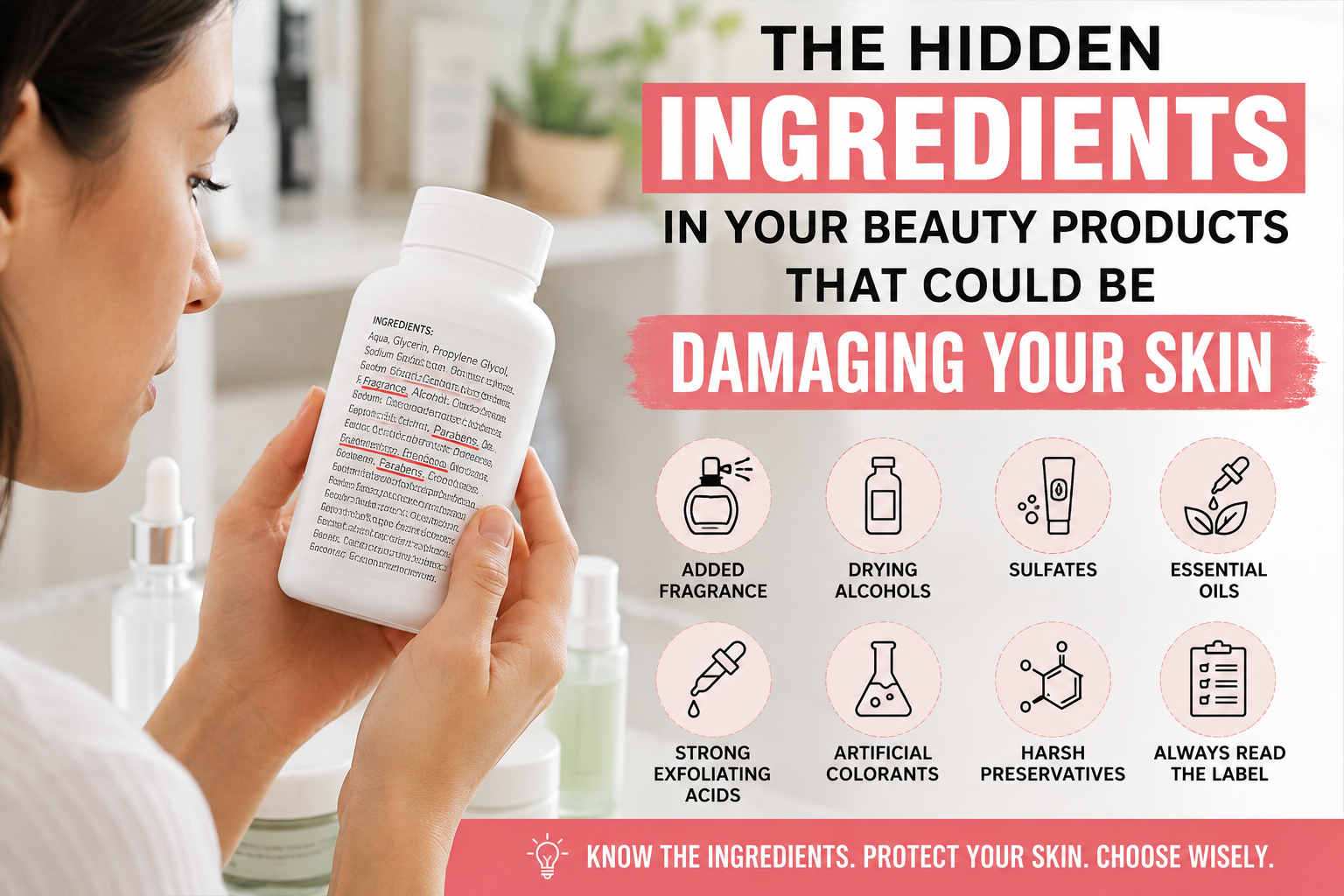
The Hidden Ingredients in Your Beauty Products That Could Be Damaging Your Skin
Discover the hidden ingredients commonly found in beauty and skincare products that may irritate or damage your skin. Learn how to read product labels, avoid common skincare mistakes, and choose products that are right for your skin type.
August 5, 2026
Have you ever bought a skincare product because it promised glowing skin, fewer wrinkles, or a flawless complexion—only to end up with irritation, dryness, or unexpected breakouts?
The truth is, the front of a beauty product often highlights attractive claims like natural, hydrating, or dermatologist tested. However, the real story is usually hidden on the back of the package: the ingredient list.
Understanding what goes into your skincare products is one of the smartest things you can do for your skin. While most cosmetic ingredients are considered safe when used correctly, some ingredients may not suit your skin type and could contribute to irritation or discomfort.
Let’s explore some of the most common ingredients that may not work for everyone and learn how to shop for skincare more confidently.
1. Added Fragrance
Fragrance is one of the most common causes of skin irritation. Although it makes products smell pleasant, it can trigger redness, itching, or allergic reactions, especially for people with sensitive skin.
Who Should Be Careful?
* People with sensitive skin
* Those with eczema or rosacea
* Anyone with fragrance allergies
Better Choice
Choose products labeled Fragrance-Free if your skin reacts easily.
2. Drying Alcohols
Not every alcohol is harmful. However, certain alcohols can remove your skin’s natural protective oils, leaving it dry and irritated.
Common drying alcohols include:
* Alcohol Denat.
* Ethanol
* Isopropyl Alcohol
On the other hand, fatty alcohols like Cetyl Alcohol and Cetearyl Alcohol help moisturize the skin and are generally well tolerated.
3. Sulfates
Sulfates are cleansing agents that create rich foam in face washes, shampoos, and body cleansers.
While they clean effectively, they may be too harsh for dry or sensitive skin because they can strip away natural oils.
Common examples include:
* Sodium Lauryl Sulfate (SLS)
* Sodium Laureth Sulfate (SLES)
If your skin feels tight after washing, consider switching to a sulfate-free cleanser.
4. Essential Oils
Many people believe that natural ingredients are always safer. Unfortunately, that’s not always true.
Essential oils such as peppermint, citrus, cinnamon, and eucalyptus may irritate sensitive skin, especially when used in high concentrations.
Always patch-test products containing essential oils before using them regularly.
5. Artificial Colorants
Artificial colors make products look attractive but usually provide no skincare benefits.
For people with reactive skin, added dyes may contribute to irritation. Simpler formulas with fewer unnecessary ingredients are often the better choice.
6. Strong Exfoliating Acids
Ingredients like glycolic acid, lactic acid, and salicylic acid are excellent for improving skin texture and reducing acne when used correctly.
However, overusing these ingredients or combining too many exfoliating products can damage your skin barrier.
Tips
* Start slowly.
* Don’t combine several exfoliating acids unless directed.
* Always wear sunscreen during the day.
7. Preservatives
Preservatives help prevent bacteria and mold from growing inside skincare products, making them essential for product safety.
Although modern preservatives are generally considered safe, a small number of people may develop sensitivities to specific preservatives.
If you repeatedly experience irritation with different products containing the same preservative, speak with a dermatologist.
How to Read a Skincare Ingredient List
Understanding ingredient labels can save you money and help you avoid products that don’t suit your skin.
Keep these tips in mind:
* Ingredients are listed from the highest concentration to the lowest.
* The first five ingredients usually make up most of the product.
* Don’t judge a product based on one ingredient alone.
* Always patch-test new skincare before applying it to your entire face.
Smart Tips for Choosing Better Beauty Products
* Know your skin type before buying products.
* Don’t buy products simply because they’re trending online.
* Introduce only one new skincare product at a time.
* Purchase from reputable brands with transparent ingredient lists.
* Wear sunscreen every day to protect your skin from premature aging.
Frequently Asked Questions (FAQs)
1. Are all ingredients in beauty products harmful?
No. Most ingredients used in skincare products are tested for safety. However, some ingredients may not be suitable for everyone, particularly people with sensitive or allergy-prone skin.
2. How do I know if a skincare product is irritating my skin?
Watch for signs such as redness, itching, burning, swelling, peeling, or unusual breakouts after using a product. If symptoms persist, discontinue use and seek advice from a dermatologist.
3. Is natural skincare always safer?
No. Natural ingredients can still cause irritation or allergic reactions. It’s important to evaluate each ingredient rather than assuming natural always means better.
4. Should everyone avoid fragrance?
No. Many people use fragranced products without any problems. However, fragrance-free products are often recommended for sensitive or reactive skin.
5. How often should I read ingredient labels?
Every time you buy a skincare product. Brands sometimes change their formulas, so it’s worth checking the ingredient list even if you’ve purchased the product before.
6. Can expensive skincare products contain irritating ingredients?
Yes. A higher price doesn’t guarantee that a product is suitable for your skin. Always read the ingredient list and choose products based on your skin’s needs rather than price alone.
7. What is the safest way to try a new skincare product?
Perform a patch test by applying a small amount to the inside of your arm or behind your ear and waiting 24–48 hours. If no irritation occurs, you can begin using it as directed.
Final Thoughts
Beautiful, healthy skin doesn’t come from buying the most expensive beauty products—it comes from understanding what your skin needs.
Learning to read ingredient labels helps you avoid unnecessary irritation, make smarter purchasing decisions, and build a skincare routine that truly works for you. Remember that skincare is personal. An ingredient that works well for one person may not be ideal for someone else.
Listen to your skin, introduce new products gradually, stay consistent with your routine, and don’t hesitate to seek professional advice if you experience ongoing skin concerns. Small, informed choices today can lead to healthier, more radiant skin in the future.
0
Comments
Sign in to leave a comment.