
sleep healthsleep habitsbetter sleepdeep sleepREM sleepcauses of fatiguemorning tirednesssleep disorders
Why You Wake Up Tired Even After 8 Hours of Sleep: Hidden Reasons Your Body Isn’t Truly Resting
Wake up tired even after 8 hours of sleep? Discover the hidden reasons you still feel exhausted, from poor sleep quality and stress to sleep disorders, plus practical tips to wake up refreshed every morning.
July 7, 2026 Seen by 77
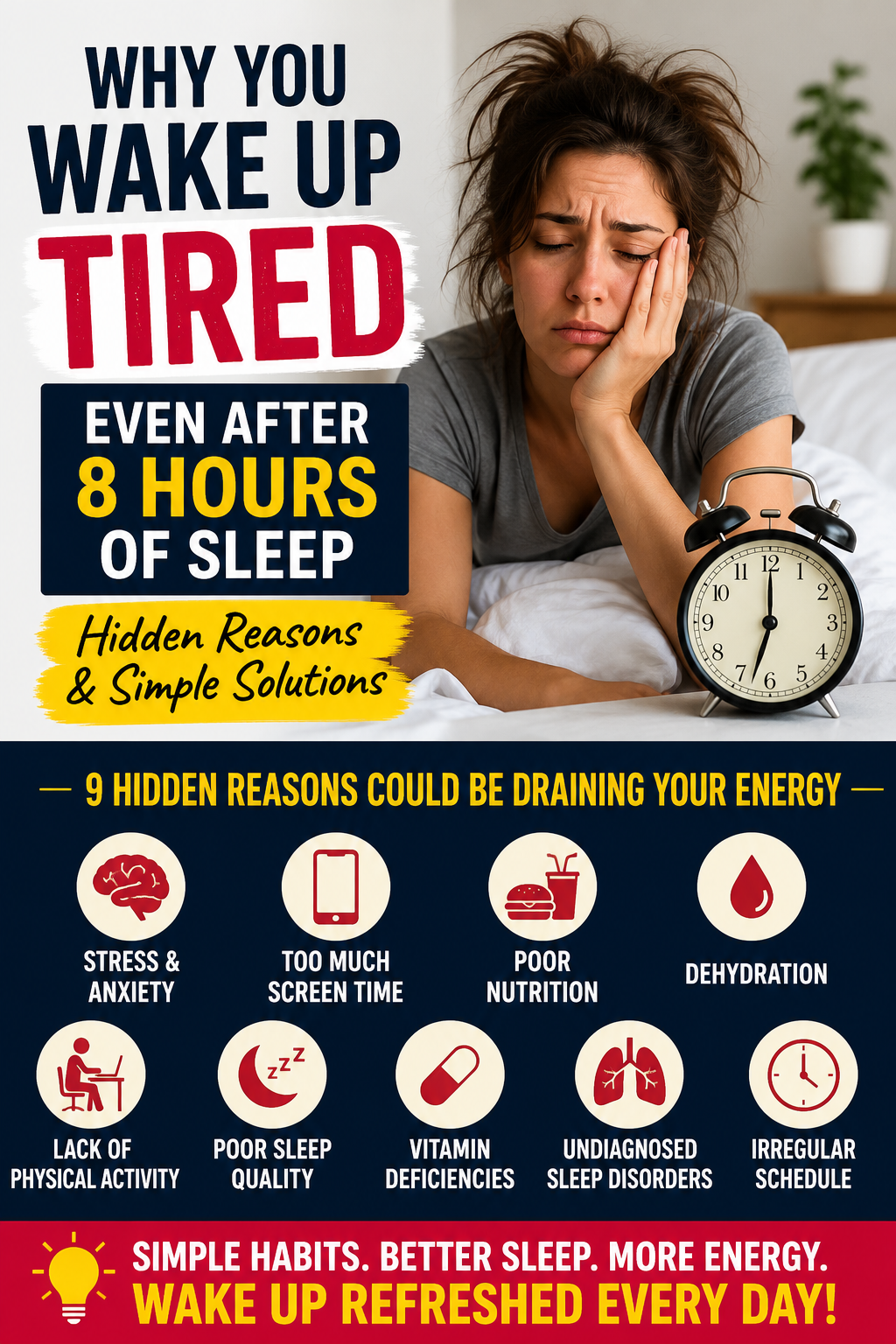
Waking up after a full night of sleep and still feeling exhausted can be confusing and frustrating. Many people believe that sleeping for 7 to 8 hours automatically guarantees good rest, but the truth is more complex. Sleep duration is important, but sleep quality, timing, lifestyle habits, and even hidden health issues all play a major role in how refreshed you feel in the morning.
If you constantly wake up tired even after what seems like enough sleep, your body may be telling you that something deeper is affecting your rest.
Understanding What “Good Sleep” Really Means
Good sleep is not only about how long you stay in bed. It is about how well your body moves through complete sleep cycles during the night.
A healthy sleep cycle includes light sleep, deep sleep, and REM (rapid eye movement) sleep. Deep sleep is especially important because it is the stage where the body repairs tissues, strengthens the immune system, and restores energy levels.
If your sleep is frequently interrupted or your body does not reach enough deep sleep, you may wake up feeling tired even after many hours in bed.
Poor Sleep Quality Can Be the Real Problem
One of the most common reasons people wake up tired is poor sleep quality. You may be sleeping for 8 hours, but if that sleep is light, broken, or restless, your brain and body do not get full recovery.
Frequent waking during the night—even if you don’t fully remember it—can interrupt sleep cycles. These interruptions prevent you from reaching deep, restorative sleep stages.
Noise, uncomfortable bedding, room temperature, and stress can all reduce sleep quality without you realizing it.
Stress and Overthinking Before Bed
Your mental state before sleep strongly affects how refreshed you feel in the morning.
When you go to bed with stress, anxiety, or overthinking, your brain remains active even while your body is trying to rest. This can lead to shallow sleep and reduced time in deep sleep stages.
People who frequently worry, scroll on their phones before bed, or mentally replay daily problems often wake up feeling like they never truly rested.
Screen Time Is Disrupting Your Sleep Cycle
Modern lifestyle habits, especially excessive screen use before bedtime, are a major cause of poor sleep quality.
Phones, tablets, and TVs emit blue light, which reduces the production of melatonin—the hormone responsible for sleep regulation.
When melatonin levels are low, your body struggles to enter deep sleep properly, even if you fall asleep quickly. This results in tiredness in the morning and reduced alertness throughout the day.
Irregular Sleep Schedules Confuse Your Body Clock
Your body has an internal clock known as the circadian rhythm. This system regulates when you feel awake and when you feel sleepy.
If you sleep at different times every night or wake up at inconsistent hours, your body struggles to maintain a stable rhythm. As a result, even long sleep hours may not feel refreshing.
People who sleep late on weekends and wake early on weekdays often experience this imbalance.
Hidden Sleep Disorders You Might Not Notice
Sometimes, waking up tired after 8 hours of sleep is caused by underlying sleep disorders.
Conditions like sleep apnea, where breathing repeatedly stops and starts during sleep, can severely reduce sleep quality. Even though the person is asleep for many hours, their brain is constantly interrupted.
Other conditions such as restless leg syndrome or chronic insomnia can also prevent deep, restorative sleep.
If tiredness continues for a long time despite improving habits, it may be important to seek medical advice.
Diet and Lifestyle Habits Affect Sleep Quality
What you consume during the day also impacts how rested you feel in the morning.
Caffeine, especially in the afternoon or evening, can stay in your system for hours and reduce deep sleep. Similarly, heavy meals before bedtime can make digestion active when your body should be resting.
Lack of physical activity can also contribute to poor sleep quality, as regular movement helps regulate energy levels and supports deeper sleep.
Emotional Fatigue Can Mimic Sleepiness
Sometimes, the problem is not physical sleep quality but emotional exhaustion.
If you are dealing with stress, burnout, or emotional pressure, your body may feel tired even after sleeping enough hours. Emotional fatigue affects how refreshed your brain feels after waking up.
This is why some people still feel drained even after a full night of sleep and no physical exertion.
How to Wake Up Feeling Rested Again
Improving how you feel in the morning requires focusing on both sleep quality and daily habits.
Try maintaining a consistent sleep schedule by going to bed and waking up at the same time every day. This helps stabilize your internal body clock.
Reduce screen use at least 30–60 minutes before bed to allow natural melatonin production. Creating a calm bedtime routine can also help your brain prepare for deep sleep.
Make your sleep environment comfortable by reducing noise, keeping the room cool, and using supportive bedding.
Managing stress through relaxation techniques such as deep breathing or journaling before bed can also improve sleep depth.
If symptoms persist, consider checking for possible sleep disorders with a healthcare professional.
Conclusion
Waking up tired after 8 hours of sleep is more common than many people think, and it is usually a sign that sleep quality—not just sleep duration—is the issue. Factors such as stress, screen exposure, irregular schedules, hidden sleep disorders, and lifestyle habits can all interfere with deep, restorative sleep.
Understanding these causes is the first step toward improving your rest. When you focus on building healthier sleep habits and protecting your sleep quality, you give your body the chance to fully recover, so you can wake up energized, focused, and ready for the day.
0
Comments
Sign in to leave a comment.